

Ten journalism undergraduates to be paired with working journalists for mentoring scheme.
By Eve Lacroix (Senior Communications Officer), Published
Ten budding journalists at City St George's, University of London will have the opportunity to be mentored by working journalists thanks to a new partnership with the John Schofield Trust (JST).
JST was established 30 years ago by Susie Schofield in memory of her husband, the late John Schofield, who was killed aged 29 while on assignment in Croatia for the BBC in 1995. The charity supports young and aspiring journalists through its mentoring programmes, masterclasses and networking events.
The mentorship scheme will pair undergraduate students with working journalists to provide guidance on their careers.
The matching process highlights the characteristics that make each mentee distinct, said Jonathan Paterson, Chair of the JST Board of Trustees, and a Visiting Lecturer at City St Georges, who coordinated the partnership.

If someone is interested in TV sports commentary, JST will match them with a sports commentator from broadcasting, but it also considers lived experiences and preferences, such as whether mentor and mentee come from the same region of the UK.
As Fellows, students can access monthly masterclasses and attend the Trust’s networking events.
Mentors in the pool include household names such as Ros Atkins, Fiona Bruce and Victoria Derbyshire.
One of the goals of the JST university scheme is to improve diversity in the profession, as much of the journalism sector in the UK remains white and middle class.
The JST is also working hard to improve diversity in the profession, as journalists are increasingly drawn from a narrow group in society. It's student scheme works with universities to ensure that mentees are drawn from a range of different backgrounds.
The scheme connects students with mentors who are four or five years ahead of them in their careers and can offer recent experience, from building relationships with editors to navigating difficult conversations at work.
"We want to tie students into people who can say, 'look, this is how you do it, and I've done it in the last five years,'" said Paterson. "These are the things that really make the difference in the lives of our mentees."
Paterson added:
The Department for Journalism consistently ranks top in the country for its education as well as its graduate employability. Professor Karen Fowler-Watt, Head of the Department, said:
Paterson teaches a module on digital storytelling, drawing on his professional experience. He led the video team at BBC News and was part of the launch team of The News Movement, a social-first digital news publisher aimed at Gen Z.
Having worked closely with students for five years now, he's noticed a trend of many students moving into roles in social media rather than traditional TV.
"My main concentration at City St George's is helping journalists meet audiences where they are today," he said. "Much of journalism education is driven by practices from the past around television, radio and print but we have to get people prepped for the new era of journalism."
Keeping students abreast of changes in the field could mean giving them more multimedia training and preparing them to work across different platforms, as many journalists now write articles for the web and record short social media videos on the same topic.
The Department for Journalism will be hosting a launch event for the mentorship programme's network of Fellows to meet and mingle later in October. The event will include a panel of journalists discussing how they got to where they are, sharing their most memorable moments, offering general advice and answering students' questions.
Related schools, departments and centres
Other stories you might like
-

City St George’s Podcasting students launch series to celebrate journalism department’s 50th anniversary
Podcasting students talk to experts about future of journalism
-
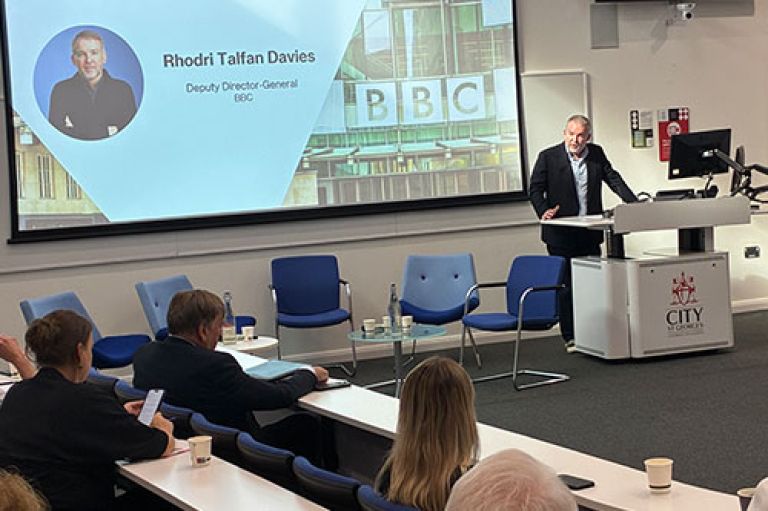
Beyond Britain: The Global Value of the BBC
As the BBC prepares for Charter renewal, broadcasters and academics warn that trusted public service media is becoming more important in an era of disinformation, geopolitical tension and declining fu
-
Lord Kinnock speaks with journalism students about Labour, Starmer’s leadership and the Mandelson crisis
Master’s students on the elective Political Reporting module speak with former Labour leader about the Party and current affairs.


