
As the BBC prepares for Charter renewal, broadcasters and academics warn that trusted public service media is becoming more important in an era of disinformation, geopolitical tension and declining funding.
By Eve Lacroix (Senior Communications Officer), Published
“[We are in] an anxious world, typified by growing division, tension, and repression, and changing at a breakneck speed,” said Rhodri Talfan Davies, Deputy Director-General of the BBC at an event on campus at City St George’s, University of London earlier this month. “The direction of travel for press freedom alone is deeply worrying.”
His keynote came as part of the Beyond Britain: The Global Value of the BBC event, hosted in partnership with Public Media Alliance and City St George’s Centre for Journalism and Democracy.
BBC News presenter Maryam Moshiri moderated the event, which also featured Cilla Benkö, Director-General of Sveriges Radio in Sweden; Karen Donders, Director of Public Value of VRT in Belgium; Martin Scott, Professor of Media and Global Development of the University of East Anglia; and Sir John Whittingdale MP, Chair of the Media Freedom All Parliamentary Group.

Funding the BBC and the Royal Charter
The BBC is in discussions with the government over the renewal of its Royal Charter, which expires at the end of 2026 and determines how the organisation is governed and funded.
Current BBC funding primarily comes through the licence fee, but the number of licence-payers is declining year on year.
The World Service was previously funded directly by government grants but is now largely supported through the licence fee. Speakers argued that current funding levels are insufficient, despite its global impact, as it reaches around half a billion people each week and provides news in countries where its journalism faces restrictions.
The BBC is also ranked among the world's most trusted news organisations for reliability and independence.
Talfan Davies pointed to research suggesting international politicians who listen to the World Service are more likely to invest in the UK and support democratic rights.

Public broadcasting protects democratic rights worldwide
Sir Whittingdale highlighted the role of the BBC World Service in providing reliable and trusted news in a world of online disinformation.
“We are now at war,” he said. “There is a variety of different ways in which we are being confronted, but one of them is an information war. We are battling for the hearts and minds of people around the world."
“To be able to win the information war, you need to have strong and independent public service media,” added Benkö. “They can never ever be perceived as state broadcasters because when we've gone, people will go to social media, be on Telegram, and there will be a mouthpiece for disinformation and propaganda.”
Professor Scott said one of the most significant challenges facing public service media is maintaining editorial independence while securing sustainable funding.
Donders agreed, adding: “Information security is really important in this very crazy world where you have so much geopolitical pressure and you have all this dominance of Big Tech.”
Beyond supporting democratic debate, speakers also emphasised the role public broadcasters can play during emergencies.
Benkö noted that radio can still reach citizens during conflicts and natural disasters when internet and electricity networks are unavailable.
“It's not a very British thing to say, but we also have some muscles to flex; a unique position of strength grounded in public trust, creative excellence, and global reach,” said Talfan Davies. “We are the antidote to myths and disinformation; we are a bulwark against global monoculture; we are a champion for shared truth and understanding that brings audiences together – rather than pushing them apart.”
Related schools, departments and centres
Other stories you might like
-
City St George’s Podcasting students launch series to celebrate journalism department’s 50th anniversary
Podcasting students talk to experts about future of journalism
-
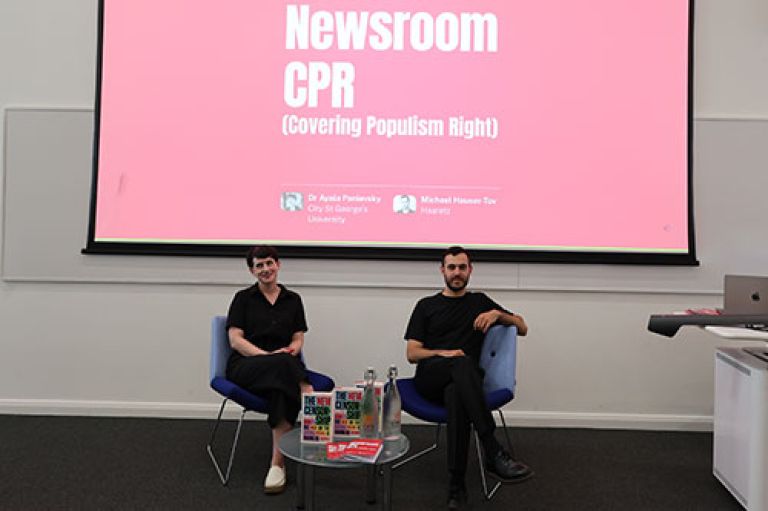
Newsroom CPR: new toolkit helps journalists report on populism
Dr Ayala Panievsky launches new toolkit based on her research around the media, rightwing populism, and democratic backsliding.
-
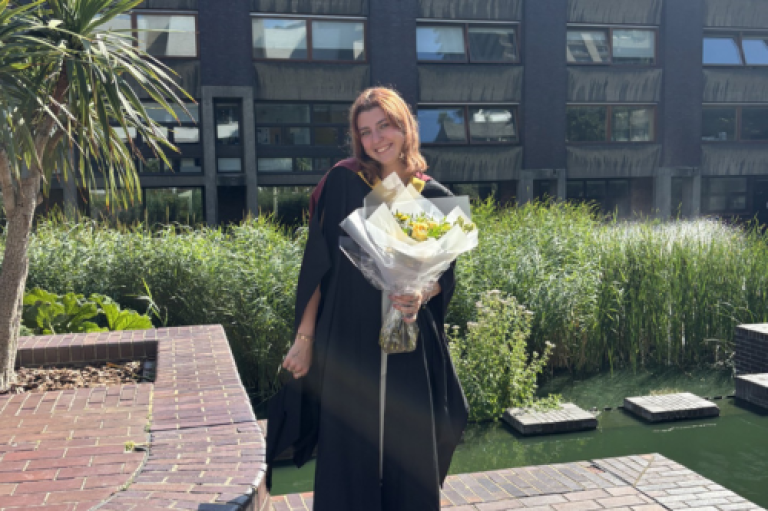
“I have a dream” – City St George’s student set to become a war correspondent after graduating
One recent BA Journalism, Politics and History graduate shares her journey of going back to Ukraine


