
Dr Ayala Panievsky launches new toolkit based on her research around the media, rightwing populism, and democratic backsliding.
By Eve Lacroix (Senior Communications Officer), Published
“We should demand pledges on media freedom from our politicians,” argues Dr Ayala Panievsky, Presidential Fellow at City St George’s, University of London. “The current situation is unsustainable.”
Her call to action came as part of an event to launch the journalism toolkit Newsroom CPR: Covering Populism Right, which she launched on campus at City St George’s alongside collaborator Michael Hauser-Tov, who is a journalist for Haaretz.
The toolkit is based on her book The New Censorship, which collated years of research into how the media is under attack, rightwing populism and democratic backsliding.
The event was supported by the Centre for Democracy and Journalism. The project’s advisory board includes former The Guardian editor-in-chief Alan Rusbridger, University of Cambridge social psychologist Professor Sander van der Linden and City St George’s colleague Professor Jane Martinson.
The status quo: rising populism and attacks on the media
Populists don’t really care if you write a bad news story about them as long as you’re writing about them, argues journalist Michael Hauser-Tov.
Populists try to use journalists as vehicles to spread hate. This leaves them in a double bind: not reporting on hate speech can be perceived as condoning or downplaying the harm it causes. Reporting on the hate crime risks further propagating harmful messages.
Research being published worldwide has found that physical attacks and online bashing are causing journalists to self-censor and change the way they work.
Dr Panievsky argues that this chilling effect harms the public’s right to know and ability to be informed about what is happening in their countries and worldwide.
She urged journalists not to shy away from covering this topic. She said:

For journalist safety, solidarity is crucial
One of the main findings that came up in research from across the world is the role of solidarity in helping journalists combat mistruths, attacks and report on populism.
Journalism can be a competitive profession; media workers are often competing between each other to be the first to break a story or print an exclusive quote.
But Hauser-Tov argues that no journalist or outlet can change reality alone.
“It doesn’t matter if I expose a huge story if I am the only one reporting it,” he said. “You need colleagues to do follow-up stories. It does not matter if you work at the biggest TV station or the smallest publication.”
One practical tip Dr Panievsky suggested is for all journalists to repeat the same question in a press conference if it is being dismissed or ignored.
Dr Panievsky added that it is easier for journalists to collaborate when not in direct competition. For example, legal correspondents could work with political correspondents, or journalists working across different mediums such as broadcast vs print.
Prevention is better than a cure
When a journalist is considering objectivity and balance, Dr Panievsky and Hauser-Tov argue that the process matters more than about the results.
“It is not your job to balance out unbalanced stories,” explains Dr Panievsky.
Journalists should pursue stories around politicians they like and dislike with the same level of passion.
Equally, journalists need not air interviews or print quotes that are demonstrably false to keep up an ideal of reporting objectively.
A rule of thumb included in the Newsroom CPR toolkit is for journalists to prioritise pre-bunking lies rather than debunking them after the fact, which the speakers likened to preventions being better than a cure.
Dr Panievsky said:
Ahead of a politician’s speech, broadcasters can play short snippets with factchecks and previous lies to serve as a warning of lies might be repeated.
This approach is proven to work according to research by social psychologist Professor Sander van der Linden, who developed the concept of psychological inoculation.
Journalism needs funding and political support to survive
In recent years, news organisations have bent at the knee of tech oligarchs and populists because there is far more money on the other side of the room.
Billionaire Jeff Bezos’ takeover of The Washington Post led to editorial changes; and thousands of staff members at Voice of America were put on leave following an executive order by Trump in 2025.
But there are counterexamples. The Israeli news channel Channel 13, which is critical of the government’s leader Benjamin Netanyahu. Patrick Drahi, who owns a news channel in Israel which runs more positive coverage of Netanyahu, is attempting to buy Channel 13. To block the sale, journalists at the organisation are unionised and are working towards finding a rival bidder.
Strengthening the media ecosystem is another way in saving journalism, argues Dr Panievsky. She said:
Related schools, departments and centres
Other stories you might like
-
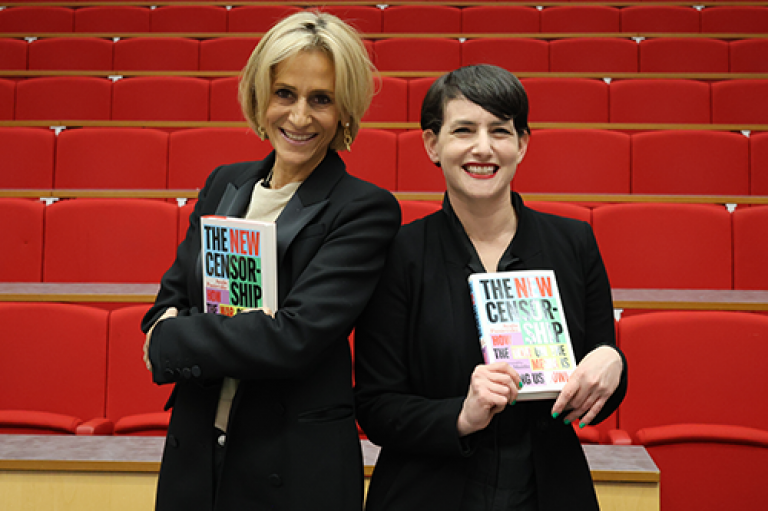
Journalism Under Attack: Emily Maitlis in conversation with Ayala Panievsky
Emily Maitlis joined City St George's academic and author Dr Ayala Panievsky to discuss the challenges facing journalists today and what can be done to still hold power to account
-
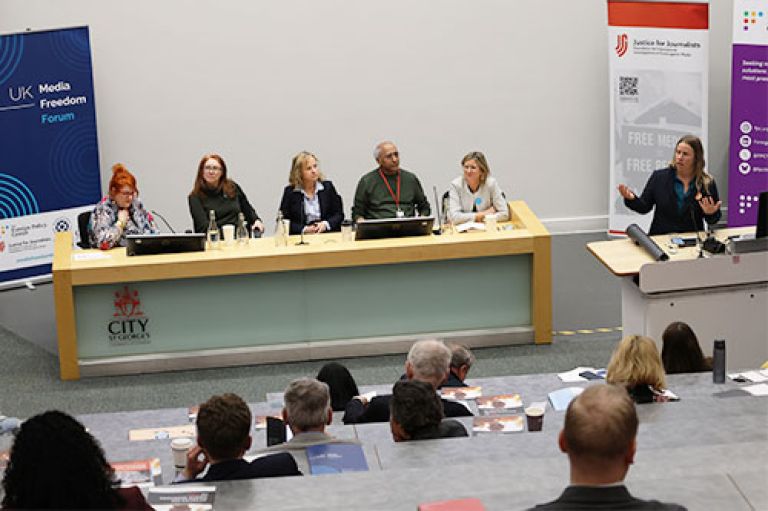
“A free media is a free people”: Centre for Journalism and Democracy launches at the Media Freedom Forum
City St George’s hosts urgent two-day forum to build strategies on preserving a free press internationally.
-
Online violence is pushing women out of public life
Deepfakes, unwanted advances, picture leaks: a hostile online environment pushes women in public life to self-censor, finds report co-authored by City St George's researchers for UN Women.


