

Deepfakes, unwanted advances, picture leaks: a hostile online environment pushes women in public life to self-censor, finds report co-authored by City St George's researchers for UN Women.
By Eve Lacroix (Senior Communications Officer), Published
Online violence against women in public life is becoming increasingly technologically sophisticated, a new report co-authored by researchers at City St George’s, University of London finds.
The UN Women-published report “Tipping point: Online violence impacts, manifestations and redress in the AI age”, was produced in partnership with City St George’s, and TheNerve, the digital forensics lab founded by Nobel laureate Maria Ressa.
The report analysed the experiences of 641 women journalists and media workers, activists, and human rights’ defenders from 119 countries. The women were surveyed in late 2025, and the researchers concluded:
- 27 per cent of women respondents were targeted with unsolicited sexual advances via direct message, receiving unwanted intimate images, “cyberflashing”, sexual innuendos or nonconsensual sexting
- 12 per cent of respondents had their personal images, including those of an intimate nature, shared without their consent
- 6 per cent of respondents have been subjected to deepfakes or manipulated images and videos.
These attacks were often deliberate and coordinated, aiming to silence women in public life while undermining their professional credibility and personal reputations.
The impacts include an alarming rate of mental health diagnoses and self-censorship:
- Nearly one-quarter (24 per cent) of respondents have experienced anxiety and/or depression linked to online violence
- 13 per cent reported being diagnosed with Post-Traumatic Stress Disorder (PTSD)
- 41 per cent of respondents said they self-censored on social media to avoid being abused, and 19 per cent were self-censoring at work as a result.
The study found that while 25 per cent of respondents had reported incidents of online violence to the police and 15 per cent had taken legal action, justice still eludes them:
- 24 per cent of the women who had reported online violence felt victim-blamed by the police, having been asked questions like “What did you do to provoke the violence?”
- 24 per cent also said the police made them to feel responsible for shielding themselves from further violence.
Julie Posetti, Professor of Journalism and Chair of the Centre for Journalism and Democracy at City St George’s is the project’s principal researcher and the report’s lead author. She said:
Co-author Lea Hellmueller, Associate Professor of Journalism, and Associate Dean for Research and Innovation at City St George’s, added:
Pauline Renaud, Lecturer in Journalism at City St George’s, and fellow co-author of the study, said:
Related schools, departments and centres
Other stories you might like
-

Seven in ten women in public life report experiencing online violence; dramatic increase in offline harm experienced by women journalists
Professor Julie Posetti and Dr Lea Hellmueller co-wrote research for UN Women into the online and offline violence women in public life experience online.
-
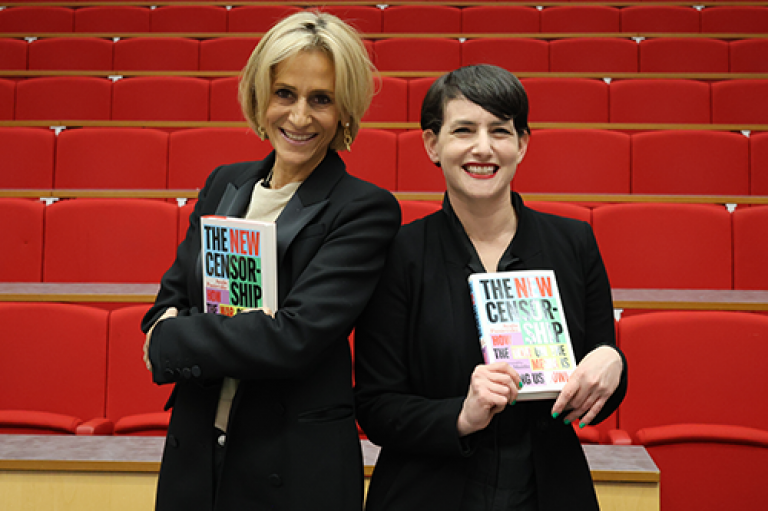
Journalism Under Attack: Emily Maitlis in conversation with Ayala Panievsky
Emily Maitlis joined City St George's academic and author Dr Ayala Panievsky to discuss the challenges facing journalists today and what can be done to still hold power to account
-

Trump is the primary source of US disinformation in POC media, finds ICFJ study
New research co-authored by Professor Julie Posetti reveals the sources of the spread of misinformation during the US 2024 election cycle.


