

City St George’s social scientist shared research and practical tools with the Metropolitan Police Service's Counter Terrorism Command to help identify coordinated disinformation campaigns and state-backed influence operations online.
By Eve Lacroix (Senior Communications Officer), Published
Dr Marcos Bastos of City St George’s, University of London delivered a training session to the Counter Terrorism Command of the Metropolitan Police Service in London earlier this year.
The session provided an overview of Dr Bastos’ research on foreign interference through networks of fake X (formerly Twitter) accounts carrying out influence campaigns and provided a tutorial on the tools police forces can use to identify these fake accounts.
State interference is increasingly online; successful disinformation campaigns depend on the availability of fake social media profiles used for coordinated inauthentic behaviour.
These networks of false accounts can be bots, trolls, or “sockpuppets”, which are fake online identities used by real people to deceive or manipulate public opinion.
These tactics are particularly used around elections, with a 2024 study finding evidence of foreign interference in 30% of the 63 national elections held that year through either social media or fake news sites. This meant 60% of the voting population had been affected.
The workshop was particularly pertinent as one fifth of the Counter Terrorism Policing teams’ casework involves countering state-sponsored threats, with senior officers describing a sharp escalation in foreign interference across the UK.
Dr Bastos’ research analysed forty thousand fake X (then-Twitter) profiles, using machine learning and a facial learning recognition tool to classify fake user accounts links to foreign influence operations.
His workshop looked at the kinds of fake profiles created by the International Research Agency (IRA), which is linked to the Kremlin and is sometimes referred to as a Russian “troll factory”.
These networks of accounts are part of influence operations, targeting Latin America, Turkey, Spain, America or Israel.
Users can expect to see typical tropes or archetypes of accounts, some of them depicting sensual-young women with selfies as their profile pictures, others showing K-pop fans, and some being selfies with flags overlaid on them.
Dr Bastos is a Senior Lecturer in Media and Communication with a research focus on digital media and the cross-effects between online and offline social networks. His research on the topic of foreign interference online began in 2012.

In response to an IRA influence campaign, in 2017 he began analysing a database of 115,474 unique X (then Twitter) accounts, millions of tweets, and resulted in over one terabyte of media removed from the platform. The influence operations were carried out across 57 countries.
Discussing the importance of collaboration between researchers and practitioners, Dr Bastos said: "There is complementarity in working with industry and practitioners as we can address an issue from different angles."
Reflecting on how online influence operations have evolved, he said:
He added that investigators should focus on "Coordination, not just content. Individual posts are increasingly indistinguishable from real ones."
Related schools, departments and centres
Other stories you might like
-
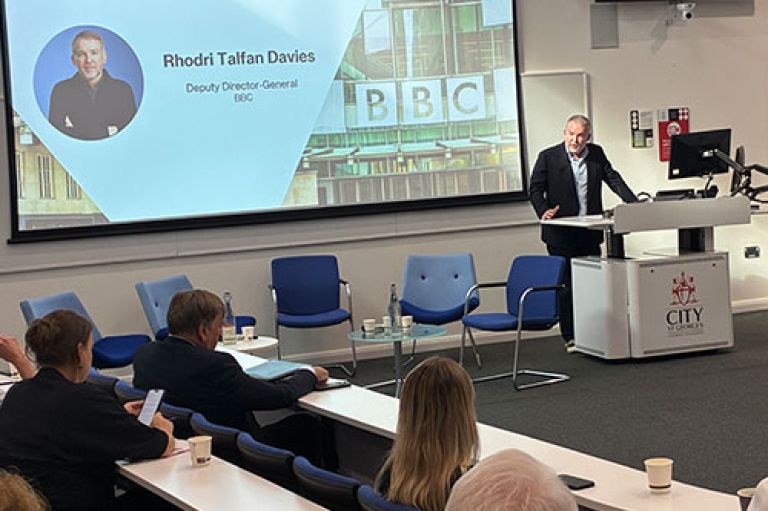
Beyond Britain: The Global Value of the BBC
As the BBC prepares for Charter renewal, broadcasters and academics warn that trusted public service media is becoming more important in an era of disinformation, geopolitical tension and declining fu
-
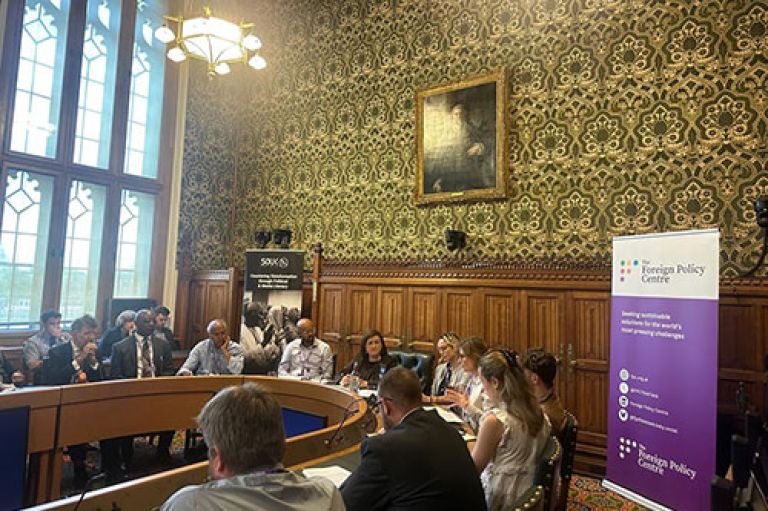
“Media literacy is vital for democracy”: Global Disorder Group cohosts parliamentary event
The Global Disorder Group cohosts parliamentary briefing with the Foreign Policy Centre on political rhetoric, disinformation and democracy.
-

Botnets and information warfare
It’s five years since City’s Dr Marco Bastos’s research became a global news story as he uncovered a network of Twitterbots seeking to influence the Brexit vote. How much has changed?
-
Algorithmic filtering in times of warfare
Dr Marco Bastos, Department of Sociology and Criminology, on the current problems facing Facebook in Russia.


