
Noted journalists Polly Toynbee and David Walker deliver the Jeremy Tunstall Memorial Lecture on the state of British media, impartiality and rightwing bias.
By Eve Lacroix (Senior Communications Officer), Published (Updated )
“Too many people bend themselves towards what a proprietor wants,” warned The Guardian columnist Polly Toynbee, describing the rightwing bias of British media.
Alongside David Walker, a fellow journalist and academic and her partner, they delivered the Jeremy Tunstall Memorial Lecture at City St George’s, University of London.
The late Professor Tunstall was one of the founding fathers of British sociology, media and journalism studies and was a Professor at City St George's, whose research focused on journalists.
In a full circle moment, Walker was a research assistant to Tunstall on his project The Media are American. Walker called Tunstall “a friend, a mentor, a collaborator and a pioneer.”
The event was moderated by Professor Charles Lees, Dean of the School of Policy & Global Affairs and introduced by Professor Petros Iosifidis, who worked closely with Tunstall.

Historic rightwing bias in British media
Toynbee estimates that 80 percent of British news outlets are right-wing.
This percentage increased exponentially under politically conservative media mogul Rupert Murdoch, who was long at the helm of the News Corp empire, which owns newspapers including The Sun and The Times. Rupert’s son Lachlan now owns News Corp.
“I had a very lucky time of it in my career,” says Toynbee, who has been a columnist for the leftwing newspaper The Guardian since 1998. “If young people want to go into journalism, they unfortunately might need to join these rightwing papers.”
She describes herself as suspicious of rightwing people campaigning against young people going to university as statistics indicate most people who go to study leave with more liberal views.
As a longtime columnist at The Guardian, one of her favourite parts of the paper is the amount of expertise it holds. Each correspondent and editor have a focus – be it health, or education or science – and are subject-matter experts.
Her advice to aspiring journalists is:
The attention economy and personality-first reporting
In today’s attention economy, and with dwindling resources to support journalism, personalities (such as Nigel Farage of Reform) have gotten bigger.
Some journalists look for what Toynbee calls a “gotcha story” when they interview politicians, which has made politics feel like watching “extreme theatre”.
Walker adds that news audiences are deemed to not be interested enough in ministerial affairs.
With nearly 300 local newspapers closing since 2005, there are broad swathes of the UK’s population who no longer have access to news about their local area.
Walker said:
Walker reminded the audience of The Guardian’s longtime dictum: comment is free and facts are sacred. He described the Financial Times as a bastion of that dictum, carrying it “with rigour and honesty.”
As a columnist, Toynbee has more space to inject her personal views into her writing and campaign for what she believes in, as long as her opinions are backed up by facts and she checks her own biases.
Beyond the theatre of politics, a preference for newness and excitement is a bias baked within to the structure of journalism.
“News better not be what you read yesterday,” says Toynbee. “You have to catch people’s eye and to entertain as well as to inform.”
Jeremy Tunstall Memorial Lecture
Professor Tunstall was highly respected across the University for his interdisciplinary literature that spanned many areas and eras in public culture. His publications include the seminal Journalists at Work in 1971 and latterly Media Occupations and Professions (2001), The Media Were American: Mass Media in Decline (2007), and BBC and Television Genres in Jeopardy (2015).
“Jeremy exemplified a style of sociology that is now rare: patient, descriptive, exploratory,” reflected Walker on his experience of working with Professor Tunstall. “Jeremy was endlessly curious about workings of the press.”
He added that Professor Tunstall’s research methods had echoes to journalism, inserting testimony from its sources and asking questions with openness.
Prior to working for the Guardian, Toynbee was a regular broadcaster and formerly Social Affairs Editor at the BBC. She has also written numerous books, including Hospital and An Uneasy Inheritance, my Family and other Radicals.
Her partner Walker has been a frequent collaborator, and together they have written The Verdict – did Labour deliver; The Lost Decade, Unjust Rewards and most recently The Only Way is Up.
Related schools, departments and centres
Other stories you might like
-

Dr Elinor Carmi calls on government to challenge big tech following digital media literacy report
Dr Elinor Carmi's written evidence published in government inquiry report on online media literacy.
-
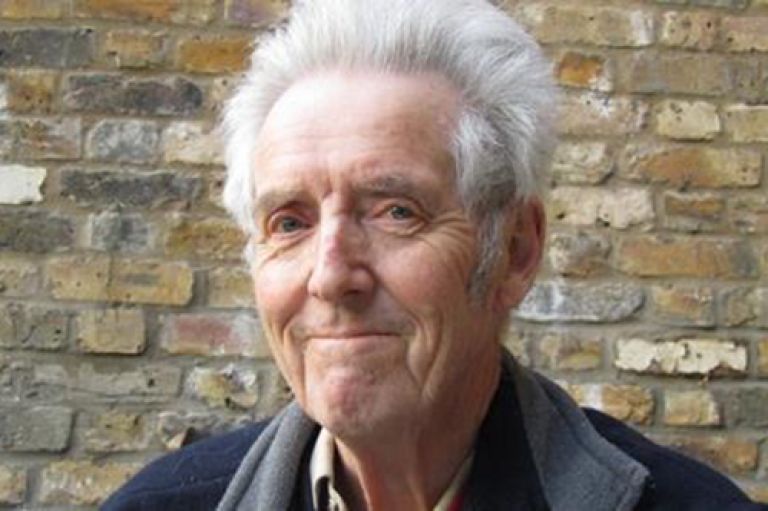
In memory of Jeremy Tunstall (1934-2023)
Colleagues pay tribute to ‘Godfather of Journalism’.
-

Here’s what Elon Musk’s language teaches us about his ambitions
Professor Petros Iosifidis, Professor in Sociology at City, University of London, unpicks the words the world's richest man uses and why.


