

Project will provide important new information on the impact of different patterns and severities of visual field loss on quality of life
By Mr George Wigmore (Senior Communications Officer), Published
The Crabb Lab at City, University of London has recently received significant funding from the US National Institutes of Health (NIH) to determine the regions of poor vision that most influence different aspects of quality of life for people affected by eye conditions such as glaucoma. This will advance our understanding of the effects of different patterns and severities of visual field loss on people’s wellbeing and provide invaluable new information for clinicians and patients. The project grant is worth around £2 million with £440,000 coming to City.
Led by the Devers Eye Institute in Portland, US, the prestigious award for the ‘Functional Testing and Quality of Life in Glaucoma’ project will support two postdoctoral researchers (Dr Riccardo Cheloni and Dr Beth Higgins) in the Crabb Lab for three and a half years. The City team, which is led by Dr David Crabb, Professor of Statistics and Vision Research, will be developing tests that are being translated via Dr Pete Jones ’ City spin-out IRIDA health, and the researchers will also be working with patients at two NHS Trusts, namely the Royal Surrey County Hospital (Guildford) and Central Middlesex Hospital.
Glaucoma is a common eye condition that damages the optic nerve and can lead to vision loss. The goal of clinical management in eye care is to protect patients’ vision and consequent quality of life. Yet, the impact of vision loss on an individual’s quality of life depends not only on its severity, but also on its location within the visual field. Some tasks are predominantly impacted by central visual field loss, while others rely more on differing regions of the peripheral visual field. As a result, two individuals with the same disease severity can have very different experiences of that loss. This is particularly true for glaucoma, which causes localised loss in locations that can differ greatly between individuals.
In the project, the researchers will determine the regions of the visual field that most influence different aspects of quality of life. The primary goal is to develop new summary indices based on current clinical testing that predict the effects on different aspects of quality of life, individualised to the patient. These can then be used as patient-centred outcomes for clinical trials, and to personalise treatment options and medical advice for an individual patient in clinical care. Glaucoma UK is also a partner of the Lab.
Professor Crabb said:
Related schools, departments and centres
Other stories you might like
-

Crabb Lab win at the Worshipful Company of Spectacle Makers
Bethany Higgins, PhD Student at City, University of London's Crabb Lab, wins the Company’s Masters Medal 2021 for her research into age-related macular degeneration (AMD).
-
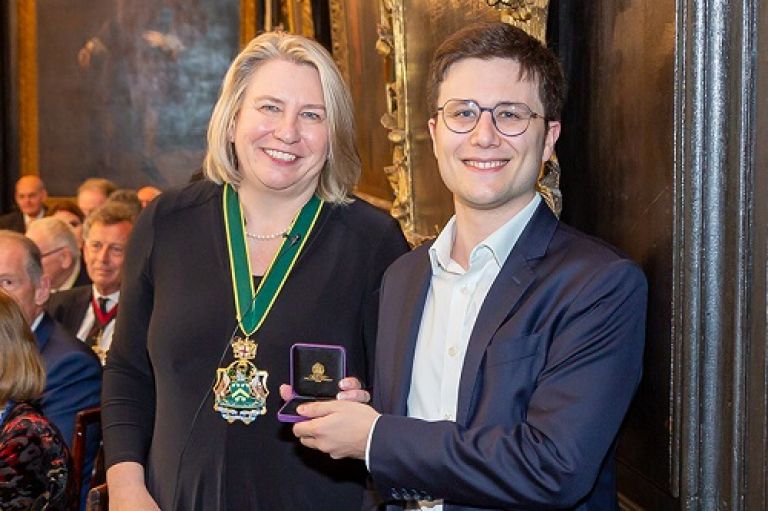
Crabb Lab academic awarded the Worshipful Company of Spectacle Makers’ Master's Medal, 2023
Dr Giovanni Montesano was awarded the medal in recognition of his outstanding research into improving visual field examinations to help monitor and prevent sight loss.
-

Foster + Partners, UCL and City, University of London develop VARID toolset for inclusive design
VARID uses dynamic real-time image processing techniques to mimic a variety of vision loss symptoms


