

Experts from City St George’s, University of London react to the Autumn Budget 2026.
By Eve Lacroix (Senior Communications Officer), Published
Chancellor of the Exchequer John Healey presented his first Budget under the new Government in Parliament on Wednesday 28 October 2026.
Under the new Government, Prime Minister Andy Burnham has shared goals of devolving power in Britain so that it does not stay entirely concentrated in London and supports greater public control of national transport such as rail.
Chancellor Healey described it as “for the working people of Britain. It’s a Budget for business, big and small” which is “built on fiscal discipline”.
Experts from City St George’s, University of London reacted to his announcement.
Young people do not deserve to be treated as ultra-exploitable, says Professor Rachel Cohen
Minimum wage for 18–20-year-olds will go up by 3.9%, which is less than was expected, and remains below the National Living Wage for older workers.
Rachel Lara Cohen, Professor of Sociology, Work and Employment, welcomed increased transparency around the gender pay gap, but on the minimum wage for young people said:
How will Russians respond to generous contribution towards Ukraine? asks Professor Michael Ben-Gad
On the morning of the Budget, Chancellor Healey and PM Burham spoke with Ukrainian President Zelenskyy to state the UK would increase its financial support to Ukraine by £10 billion in today’s Budget.
Michael Ben-Gad, Professor of Economics, with research interests in national security, said:
A steady as-as-you-go Budget with popular measures, says Professor Steve Schifferes
Much of the Budget was focused on giving British families more “breathing space” by rejecting broad-based tax rises, but Chancellor Healey was doing so against a grim economic background in which many Britons are struggling with the cost of living and young people are struggling to find work.
Steve Schifferes, Honorary Research Fellow in Financial Journalism, analysed the Budget thus so:
Related schools, departments and centres
Other stories you might like
-
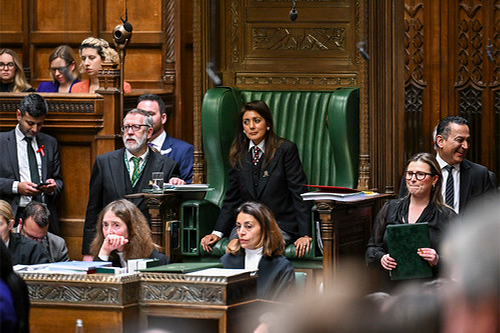
Budget 2025: Sugar tax expanded but UK tightens belt and growth slims down
The 2025 Budget signalled record levels of taxes but even a fillip for companies looking to list on the London Stock Exchange failed to convince many that the Government can deliver the level of growt
-

£3 trillion government debt weighs heavily on Reeves’ budget choices
Professor Steve Schifferes writes for The Conversation about the Autumn Budget 2025.
-
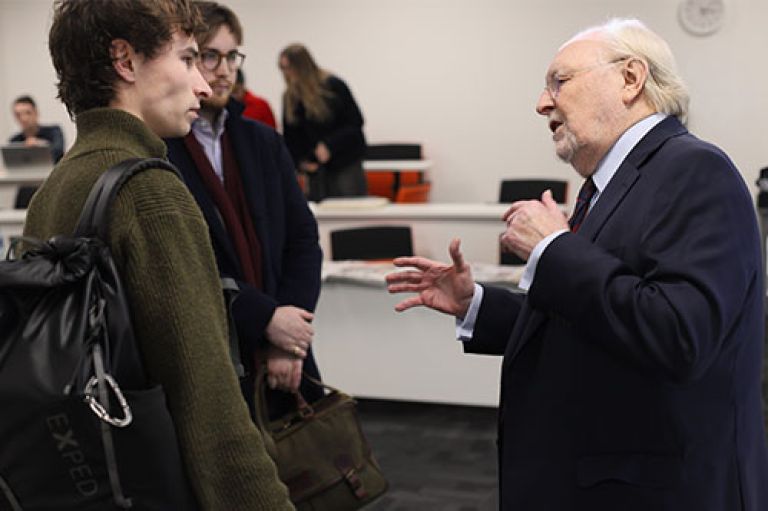
Lord Kinnock speaks with journalism students about Labour, Starmer’s leadership and the Mandelson crisis
Master’s students on the elective Political Reporting module speak with former Labour leader about the Party and current affairs.

