
In summary
Mainstream political and media narratives often present Britain as an open and welcoming country. But Dr Maya Goodfellow’s research reveals a much harsher reality.
Successive governments have introduced increasingly restrictive immigration policies, shaped by racialised ideas of belonging and worthiness, capitalist interests, and Britain’s imperial legacy. These policies have fostered hostility towards migrants and created a political environment in which exclusion is normalised.
Her work challenges the common belief that restrictive immigration policies are a recent development — showing instead that scapegoating migrants has long been a feature of British politics.
What did we explore and how?
Dr Maya Goodfellow is a political economist and writer, currently a Presidential Fellow at City St George’s, University of London.
Her research focuses on the intersections of race, capitalism, and migration in contemporary Britain. She has analysed political speeches, archival material, immigration law, and conducted interviews with migrants, asylum seekers, and lawyers.
These sources reveal a consistent pattern: governments of all political stripes — Labour and Conservative — have promoted restrictive immigration frameworks while publicly portraying Britain as open and tolerant.
Her first book, Hostile Environment: How Immigrants Became Scapegoats (Verso, 2019), explores how migrants have been repeatedly targeted across decades of policymaking.
Dr Goodfellow shows that policies like Theresa May’s 2012 “hostile environment” were not sudden or isolated, but part of a long-standing political approach focused on control and exclusion.
She also challenges the perception that New Labour had a liberal immigration stance, highlighting anti-asylum sentiment and the creation of an exploitable migrant workforce.
Her research revisits earlier state practices, such as the Home Office's use of virginity testing on South Asian women in the 1970s to verify engagements — a practice that affected around 80 women before public pressure led to its end.
Her work also examines today’s political discourse around small boat crossings in the English Channel, showing how these narratives mirror long-standing anxieties about race, migration, and empire.
Rather than being unprecedented, she argues these concerns reflect deep-rooted historical fears. Migration has always been central to Britain’s economic, cultural, and political development — inseparable from its imperial past.
Benefits and influence of this research
Dr Goodfellow’s work offers an essential counterpoint to the scapegoating of migrants in political discourse.
By uncovering the historical roots of modern hostility, she shows that today’s rhetoric is not new but part of a larger political pattern.
Her research also highlights the importance of collective resistance — with migrant groups and campaigners historically pushing back against harmful policies, like those that enabled virginity testing.
Beyond academic circles, Dr Goodfellow has contributed to wider public debates through writing and media appearances.
Hostile Environment was longlisted for the Jhalak Prize, which celebrates British writers of colour. She has appeared on BBC Question Time, Radio 4 Any Questions, and contributed to The Guardian’s Today in Focus podcast, as well as publications like The New York Times.
Through these platforms, she actively challenges dominant narratives that frame immigration as a problem rather than part of the nation’s fabric.
By combining historical research, policy analysis, and personal testimony, Dr Goodfellow equips policymakers, activists, and the public with a better understanding of how anti-migrant narratives are constructed — and why more inclusive approaches are urgently needed.
What's happening
-
Event
Nov 04
Postgraduate Open Evening (Clerkenwell Campus)
Join us at our Postgraduate Open Evening to learn more about our postgraduate courses and discover all the benefits of studying at City St George's, University of London.
, 17:00 – 19:00
Location: Clerkenwell campus
Audience: Prospective students
-
News
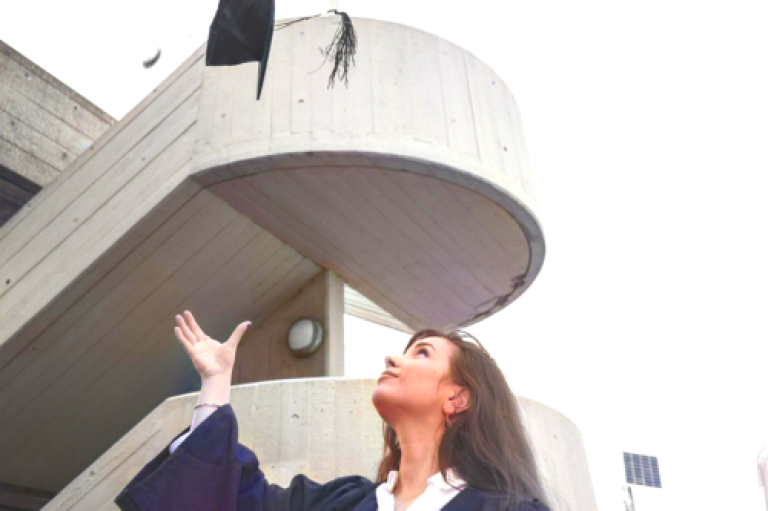
“People are pawns in the game of politics” — City St George’s student on graduating first in class despite home country being involved in a war
Law school student shares the experience of completing her studies while her family was stuck in Iran
-
News
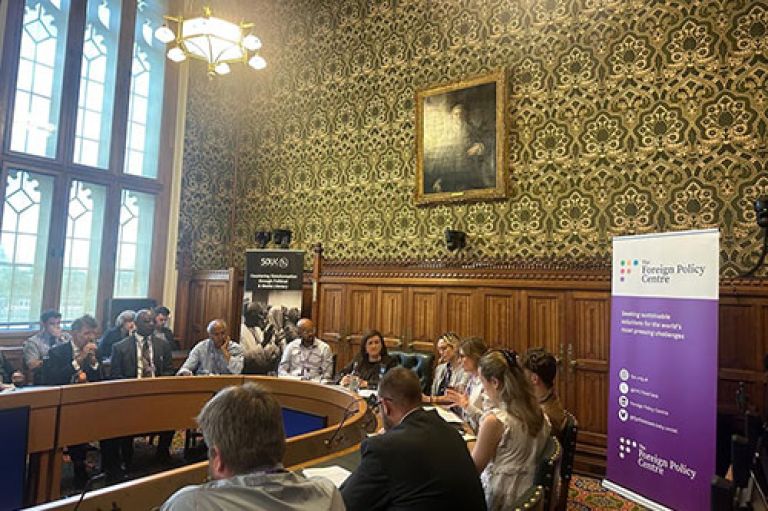
“Media literacy is vital for democracy”: Global Disorder Group cohosts parliamentary event
The Global Disorder Group cohosts parliamentary briefing with the Foreign Policy Centre on political rhetoric, disinformation and democracy.

