

In summary
Professor Emmeline Taylor’s research shows how the introduction of self-service checkouts in supermarkets has created new forms of criminal behaviour.
She coined the term SWIPERS, which stands for Seemingly Well-Intentioned Patrons Engaging in Regular Shoplifting, to describe offenders who exploit flaws in these machines.
Professor Taylor argues that many offenders rationalise their behaviour as harmless, often claiming mistakes or appealing to their social class identity to escape punishment.
Her work exposes how technology has altered patterns of shop theft and challenges assumptions that retail crime is committed only by marginalised groups.
What did we explore and how?
Emmeline Taylor is Professor of Criminology at City St George’s, University of London, and an internationally recognised expert on retail crime.
Her research on SWIPERS examined how self-checkouts alter the dynamics of shop theft. The machines provide opportunities to avoid scanning items or to substitute cheaper products.
Offenders frequently explain away their actions as accidental, particularly when confronted by staff.
Professor Taylor highlights how class signifiers, such as polished appearance or educated speech, are strategically used by offenders to reduce suspicion.
Her work also situates self-checkout theft in the broader context of rising retail crime.
She points to the impact of the 2014 Anti-Social Behaviour, Crime and Policing Act, which made theft under £200 a summary offence.
In practice, this meant that many offenders faced no meaningful consequences, creating what Professor Taylor describes as a perception of being able to steal with impunity.
At the same time, police resources have often been directed towards tackling organised cross-border retail crime, leaving prolific offenders operating within single jurisdictions under-addressed.
Professor Taylor’s commissioned report for the Co-op, Stealing with Impunity, revealed steep increases in shop theft alongside a sharp rise in violence and verbal abuse toward shop workers.
During the early months of the COVID-19 pandemic, incidents of abuse doubled and have remained high since.
She argues that the language of “shoplifting” downplays the scale of the problem and prefers the more accurate term “shop theft,” which captures both economic losses and the harm inflicted on workers.
Benefits and influence of this research
Professor Taylor’s work provides critical insight into how technological change reshapes everyday crime.
By identifying SWIPERS and analysing how social class influences perceptions of criminality, she has reframed understandings of shop theft.
Her research informs both academic debate and practical crime prevention strategies, encouraging supermarkets to rethink the design and monitoring of self-checkout systems.
Her applied research also feeds directly into public policy.
She has provided expert evidence to the House of Lords’ Justice and Home Affairs Select Committee on shoplifting and has advocated for stronger legal protections for shop workers, including a new standalone offence for assaulting staff, which the current Labour government promised to implement as part of review of the Crime and Policing Bill.
This bill is currently under proposal and, if passed, will repeal the 2014 law which set a minimum value for stolen goods to be prosecutable.
She also advises on the Retail Crime Forum chaired by the Minister for Policing, bringing her academic findings into collaboration with retailers and law enforcement.
Emmeline hosts the podcast Retail Crime Uncovered, which is now in its third season.
What's happening
-
Event
Nov 04
Postgraduate Open Evening (Clerkenwell Campus)
Join us at our Postgraduate Open Evening to learn more about our postgraduate courses and discover all the benefits of studying at City St George's, University of London.
, 17:00 – 19:00
Location: Clerkenwell campus
Audience: Prospective students
-
News
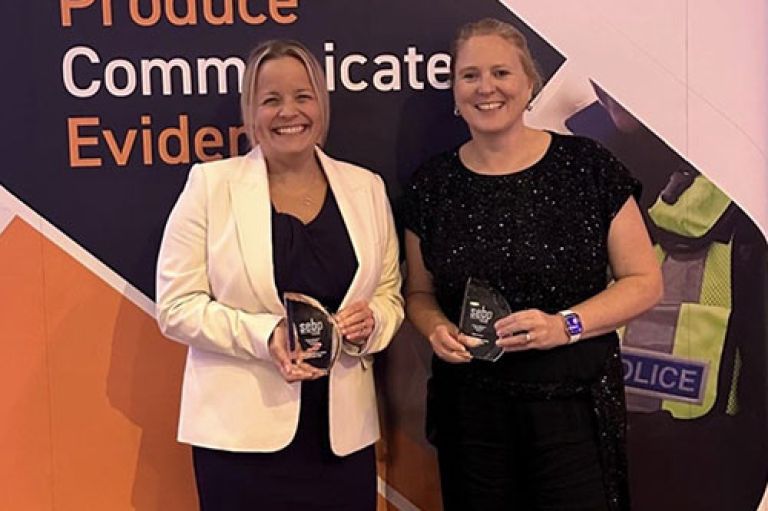
Dr Ruth Weir and Deputy Chief Constable Katy Barrow-Grint win national award for policing partnership
A City St George's researcher and a senior police leader have been recognised for a partnership that is helping drive national action on teenage relationship abuse.
-
News

The road less taken: Stories of City St George’s students who took unconventional paths to study at the university
City St George’s international graduands with atypical backgrounds.

