

Dr Andrew Hitchings, Reader in Clinical Pharmacology at the School of Health & Medical Sciences (SHMS), City St George's has been appointed as one of five new Commissioners for the Commission on Human Medicines. Here he reflects on his new role, the scope of his work and the impact the SHMS Clinical Pharmacology team are having nationally.
Published
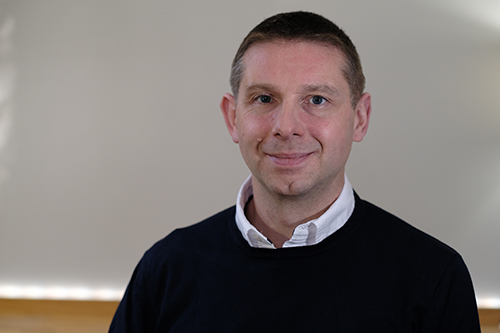 The Commission on Human Medicines (CHM) is an independent expert body that advises the Medicines and Healthcare products Regulatory Agency (MHRA) and UK Government Ministers on the safety, quality and efficacy of medicines. Its advice plays a central role in decisions about whether medicines are granted UK marketing authorisations and the terms of those authorisations.
After a competitive appointment process, Dr Hitchings was formally appointed to the role of Commissioner by James Frith MP, Parliamentary Under-Secretary of State in the Department of Health and Social Care in September 2026.
Speaking about his new role, Andrew said:
"Much of my existing work concerns how medicines are evaluated and used safely and effectively in clinical practice, so the CHM role feels like a natural extension of those interests. I am also looking forward to gaining a deeper understanding of how decisions about medicines are made at a national regulatory level."
Influencing practice beyond the University
Sharing further about the opportunity, Andrew said:
"One of the things I find particularly interesting about the CHM is that it sits at the interface between science, clinical medicine and public policy."
"The Commission’s recommendations can affect how medicines are licensed, monitored and used across the UK, so it is a fascinating place to contribute clinical pharmacology expertise."
The news follows last year's launch of the British Pharmacological Society's updated Clinical pharmacology, therapeutics & prescribing curriculum for medical degrees, which was led by Dr Dagan Lonsdale, Reader in Clinical Pharmacology and Intensive Care Medicine at SHMS. Speaking about the wider impact of the Clinical Pharmacology team at City St George’s, Andrew says:
"I think the appointment reflects something broader about clinical pharmacology here. Although our team is small in absolute terms, it is a comparatively large clinical pharmacology group by UK standards and has a particularly wide reach. Alongside my involvement with the CHM and NICE, colleagues in the group contribute to other influential national organisations and resources including the British National Formulary, the UKCPA Handbook of Pharmacogenomics and the British Pharmacological Society, as well as to research and major national initiatives in medical, clinical pharmacology and prescribing education and assessment, including the Prescribing Safety Assessment."
Good decisions for patients and the health service
Dr Hitchings’ work spans clinical practice, clinical pharmacology, medicines management and medical education. Within the University, his teaching and assessment work is focused particularly on the Medicine MBBS programme. He is also a Consultant in Neurointensive Care at St George’s Hospital, Chair of the South West London Joint Formulary Committee and Chair of NICE’s Antimicrobial Evaluation Panel.
Reflecting on his varied roles and activities, Andrew said: "the common thread is the evaluation and safe use of medicines – understanding the evidence, weighing benefits and risks, and translating that into good decisions for individual patients and the wider health service."
Congratulations Andrew on this important appointment.
City St George’s is the only UK university to offer a dedicated Clinical Pharmacology BSc.