
Students from seven London academies take part in the Future Professionals summer school
By Devangi Sharma (Communications Officer), Published
Seventy students aged between 14 and 15 from economically deprived schools across London attended the Future Professionals summer school. This was sponsored by The Lord Mayor & Liveries, including Tallow Chandlers, Management Consultants, Tax Advisers Corporation and City of London at City St George's. The free programme, aimed at upskilling students, gave them a glimpse into journalism, law, entrepreneurship and medicine among other professions.
Participating institutions included Hammersmith Academy, City of London Academy Hackney, Mulberry UTC, City of London Academy Highgate Hill, City of London Academy Highbury Grove, Leigh Halley Academy and Greig City Academy.

The programme was funded by the City of London Corporation, with donations from Livery companies and the Lord Mayor of London. Spread across two weeks starting Monday 6 July 2026, it gave a chance for these students to work with academics and explore the campus.
Sessions ranged from talking about the climate crisis to discussing the managerial challenges in the financial sector. Students got a chance to do news reporting in journalism studios and were fascinated by the amount of money corporate lawyers make.
Alexia Zimbler, senior lecturer specialising in criminal law, led one of the sessions to familiarise students with the world of law.
For students like Keiran, it was a thrilling experience.
"It's been giving me some crucial knowledge that I can apply in the real world,” he said.
“If I had to describe it in one word, I think it would be ‘joyous’. I got to learn a lot from the medical suite. I didn't know babies could have seizures.
“I learnt that journalism in studios is much more complicated than I thought. I want to do graphic design for games, but coming here has taught me that art can come in many forms and shapes."

Students like Jadzia were able to overcome their fear of public speaking
“I think I've become more confident because I'm not that good at talking in front of other people, so these activities really help me do that,” she said.
“I want to be a creative director, so the media workshop was useful in learning about branding and time constraints.”
Many students got a chance to learn about professions in depth, like Beni.
Sesen, meanwhile, discovered how jobs need not be rigid.

There was also a hackathon arranged by City Ventures to show students what entrepreneurship looks like. Students were divided into teams, all led by a member of Betterspace, a community for entrepreneurs in London. These included directors, leads, and managers, all with hands-on experience in running a company.
The activity gave students a chance to think about the atypical professions they might be able to pursue and not stick to the traditional occupations. Students also had the opportunity to come up with a business model which they presented to the entire class.
Sarah Worth, Partnership and Social Impact Manager at City Ventures, said:

Richard Allen-Campbell, from Loudspeaker, an organisation dedicated to helping young people build speaking confidence, delivered a high-energy workshop that taught students techniques to help them to speak professionally and leave them confident enough to take up opportunities. Dealing with this age group regularly, he had some key insights to share.
The programme ended with a celebration and graduation ceremony for the students.
Related schools, departments and centres
Other stories you might like
-
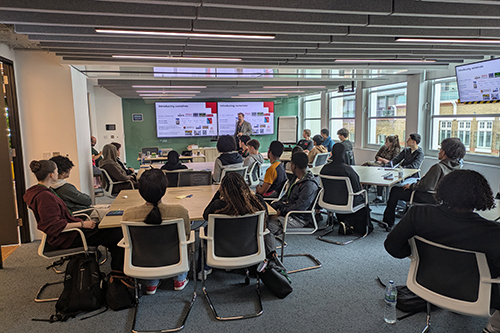
School pupils grab a glimpse of higher education and professional life
Bayes academics provide slice of industry life to Year 12 students.
-

City hosts free summer school for London pupils in partnership with Lord Mayor and Liveries
The Lord Mayor & Liveries Future Professions Summer School gave local young people a unique chance to find out more about the professions of the future
-
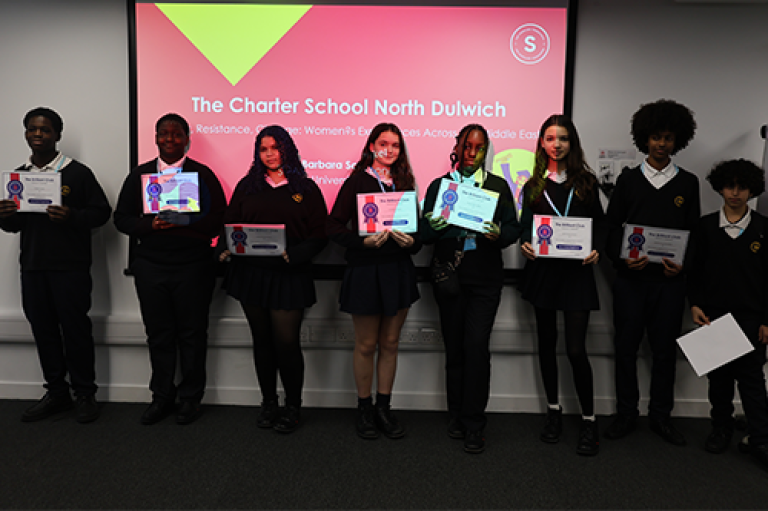
London pupils get a glimpse into university life with a visit to City St George’s
Secondary school pupils visited the University and graduated from the Brilliant Club’s Scholars Programme, which helps young people prepare for academic futures

