

Academics from the Centre for Maternal and Child Health Research discuss the recent Amos report
Researchers from the Centre for Maternal and Child Health Research (CMCHR) at City St George’s, University of London have responded to the recently published National Maternity and Neonatal Investigation, led by Baroness Valerie Amos.
CMCHR carries out high-quality research to improve the health and care of women, children, families and communities. It is an interdisciplinary team with research groups covering a broad spectrum of reproductive, maternal and child health topics.
The Amos report highlights key areas of concern, identifies barriers to delivering change and sets out a robust package of eight recommendations aimed at delivering long-term systemic and cultural transformation in maternity and neonatal care.
Researchers from the CMCHR have responded to the Amos report from three separate angles, namely public health and health inequalities, models of maternal and child health care, and maternal and infant mental health.
Overall, the team welcomes the report, including, in particular, its focus on the persistence of structural racism and its call for addressing experiences of discrimination and neglect within healthcare institutions.
Supported by previous research from City St George’s, the team also say how they strongly back the recommendation for continuity of carer. “This model of care, especially when midwifery-led, has proven benefits for women, birthing people and their babies,” they said. Further, this model supports the goal of reducing health inequities.
Another aspect appreciated by the team was the renewed focus on community-based services, particularly during the postnatal period. The Centre has carried out extensive work on midwifery-led care, group antenatal care and continuity of care, including the work on Pregnancy & Parenting Circles.
Lastly, the team also highlighted how recent research from the Centre has shown the importance of continuity of carer and coordination across services for ensuring respectful care and addressing perinatal mental health problems. “This work supports the recommendations for trauma-informed care and listening to women and birthing people to be embedded throughout maternity services,” they added.
The full responses on each aspect are as follows:
Public health and health inequalities
“The harming of a person or family during the process of bringing a new life into the world is an indescribable tragedy. The final report and recommendations from the National Maternity and Neonatal Investigation have added to the existing evidence that many Black, Asian and ethnic minority women and birthing people suffer distinct harms due to the effects of structural racism and to experiences of discrimination and neglect within healthcare institutions. Indeed, the extent of these phenomena may not have been fully captured by the investigation because, despite the team’s efforts, women from the most marginalised communities will have struggled to give evidence due to language and logistical barriers, as well as reticence or fear of authorities. The report further highlights that many Black and Asian staff are unsupported and discriminated against. Herself a Black woman, Baroness Amos has received several hostile public and media responses, despite her report’s robust methodology and balanced perspective, thus proving the disregard in which part of the nation holds Black women."
“The report urges that anti-racism and anti-discrimination on the basis of religion, sexual orientation, gender identity and disability are embedded at every level of maternity services and that mechanisms to heed service user voices are improved. Women and birthing people require services with the capacity to pro-actively engage and listen, demonstrating genuine care about their welfare and that of their families. Research from our Centre has contributed to shedding light on the pathways that can facilitate this, which the report also endorses. These include midwife continuity of care, sustained investment in partnerships with community organisations to (re)build trusting relationships and improved coordination across pregnancy, birth and postpartum. In addition, novel models such as group antenatal care provide more time and support for women facing social complexity. An empowered midwifery workforce is key to the success of these measures. We welcome the report and will do everything in our capacity to give every baby the best start in life and support the required systemic improvements so that no mother, parent or family is left behind.”
Models of maternal and child health care
“The findings from the National Maternity and Neonatal Investigation shed light on the sustained pressures on England’s maternity services, which have contributed to the erosion of care quality and safety with harmful and devastating consequences. We welcome Baroness Amos’s recommendations, which reflect the systemic nature of failures in maternity care and provide a pathway towards improvement. Framing listening to women and birthing people and positive culture as critical safety issues is an important step to reshaping how maternity care is understood, organised and provided. We strongly support the recommendation for continuity of carer during antenatal and postnatal periods. This model of care, especially when midwifery-led, has proven benefits for women, birthing people and their babies.
“We also appreciate the renewed focus on community-based services, particularly during the postnatal period. Moving forward, this focus should encompass antenatal and intrapartum services, most of which are also midwifery-led, as solutions for alleviating pressure on hospital-based services. Moving from hospital-based care to community- and neighbourhood-based care is one of the three priorities in the government’s 10 Year Health Plan. Our Centre’s work on midwifery-led care, group antenatal care and continuity of care has demonstrated the importance and benefits of these models not just to women and birthing people but also to midwives in terms of their skills development, job satisfaction and retention, all of which were also highlighted by Baroness Amos as key areas for improvement.”
Maternal and infant mental health
“As an inter-disciplinary Centre, we understand the critical role of relational care for both the physical and mental well-being of women, babies and their families. Being listened to, continuity, trust, and compassionate responses to harm are also the conditions under which perinatal mental health difficulties can be prevented and reduced. We strongly advocate for a continuity of carer approach and for better coordination between services, as supported by our research which has found that fragmented care and silo working are large barriers to women accessing perinatal mental health services.
“The recommendation to move away from a fixed risk categorisation for women and birthing people is also welcome. Those who are considered ‘high-risk’ are more likely to develop childbirth-related post-traumatic stress disorder (PTSD) and are less likely to have a birth environment that supports physiology. Research from our Centre has shown that birth trauma and childbirth-related PTSD rates in the UK are higher compared to previous years. We believe this is likely due to the reducing quality of maternity services. This work supports the recommendations for trauma-informed care and listening to women and birthing people to be embedded throughout maternity services.
“We advocate for an inter-disciplinary approach to the proposed structural change, one that will integrate psychological thinking and expertise into the Modern Service Framework and future leadership structures from the outset; this is essential for the kind of cultural change that is required. The next challenge is implementation. Research carried out by our Centre has provided evidence-based recommendations for implementing perinatal mental health care into practice. We hope that with sustained accountability, this can be the report that finally delivers the change that is needed.”
Related schools, departments and centres
Other stories you might like
-
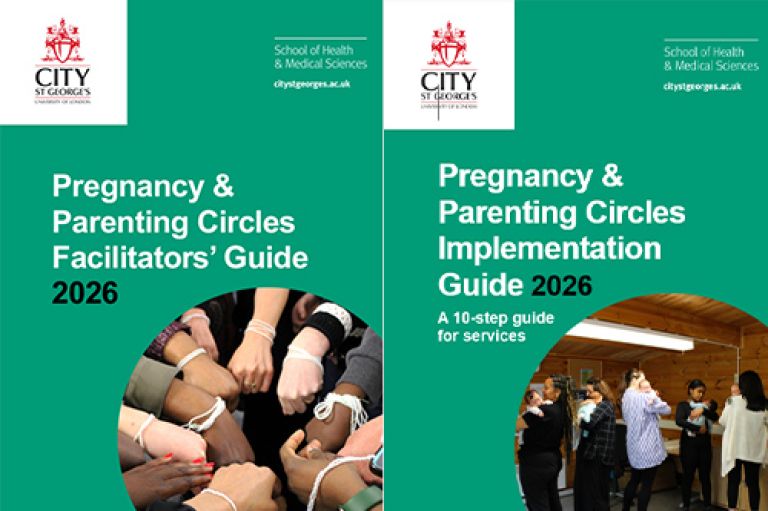
City St George’s launches new guides to support Pregnancy & Parenting Circles across the UK
New resources draw on major research studies to help services implement and facilitate group care for expectant and new parents
-

Professor Christine McCourt to chair independent review into Scottish maternity care
Professor McCourt will lead the review into how maternity services can better meet women’s needs across Scotland
-

Mould in children's bedrooms raises serious health risks
UK research shows that children living in damp and mouldy homes are more at risk of developing respiratory conditions as they grow up.


