

Researchers, clinicians, and people with lived experience came together to share insights and shape future support for those with cognitive communication difficulties
By Mr George Wigmore (Senior Communications Officer), Published
The School of Health & Medical Sciences at City St George’s, University of London hosted the TANGO (Training Communication Partners of People with Acquired Brain Injury) showcase in January to highlight how researchers in the School are advancing communication partner training for people with acquired brain injury (ABI) and their family and friends.
The hybrid event brought together a diverse group of voices, including people with lived experience, clinicians, researchers, and collaborators. Throughout the afternoon, they shared insights and discussed the TANGO study, which is funded by the National Institute for Health and Care Research. Overall, the study aims to co-design a programme of training with people who have sustained traumatic and non-traumatic injuries, their communication partners, and speech and language therapists, for use in a range of healthcare settings.
The showcase opened with a warm welcome from TANGO research lead Dr Nicholas Behn, Senior Research Fellow and Speech and Language Therapist at City St George’s. He said:
“Welcome. We don't only have you here in the room, but we've got almost 90 people attending the event online. We've got people signing in from Ireland, the Isle of Man, France, Belgium, Spain, Portugal, Denmark, Greece, and Australia. And we have about another 35 people in the room. It shows that there's a big international and national audience that is interested in what we're doing.”
“This whole project and piece of research that's been going for almost two and a half years revolves around communication partner training. To set the context, here in the UK, we have about 1.3 million people who are living with a brain injury. What we also know is that two-thirds of people who have a brain injury will have some form of cognitive communication change,” he added.

The first session, introduced by the online chair Dr Abi Roper, a Speech and Language Therapist at City St George’s, featured key contributions from the research team. Dr Behn then provided an overview of the TANGO study, outlining its aims and achievements.
In his talk, Dr Behn talked about the research carried out over the past few years, and he also spoke about the importance of communication partner training (CPT) and support for everyday conversations. He mentioned that the study involved a national survey of over 100 UK speech and language therapists, six focus groups lasting 12 hours and 16 co-design sessions involving people with brain injury, family members and speech and language therapists lasting more than 48 hours.
The next presentation was by Carla Magdalani, Research Assistant and Speech and Language Therapist, who reflected on the study’s journey and the lessons learned along the way. Carla highlighted the role of behaviour change theory in TANGO and how there’s no single way to do communication training well.

Next up in the session was Sue Barnes, Lived Experience Lead and Academic Advisor, whose talk, titled “It takes two to tango”, discussed the impact of cognitive impairment and her own lived experience, including the importance of sharing values and experiences within the Patient and Public Involvement (PPI) group. She also touched on how TANGO is addressing a gap in how important partner communication is to enable those with brain injury to reintegrate into society.
The session concluded with Orla Joyce, an MSc student and Speech and Language Therapist, who spoke about the focus groups in TANGO, including how implementation science frameworks were used to frame barriers and facilitators across different domains, from the individual up to much wider factors such as regulatory environments and societal pressures.
After a short break, attendees explored study posters and co-design materials, providing an opportunity for informal discussion and networking. The second session shifted focus to stakeholder perspectives, with powerful contributions from those involved in co-design.

Keeley, who has lived experience of ABI, shared her personal experiences and also what the co-design aspect of TANGO looked like in reality, while Raven, a family member of someone living with ABI, movingly highlighted the challenges that carers face, as well as their resilience. Vicky, a Speech and Language Therapist working with families living with ABI, added a clinical viewpoint, emphasising the importance of collaborative approaches in rehabilitation and of clinicians being involved in research.
The event concluded with further reflections from Dr Behn, who outlined the next steps for the TANGO project and its potential to influence future practice. Closing remarks from Abi Roper brought the online portion of the event to an end, while in-person attendees enjoyed a drinks reception and a chance to continue conversations.
Speaking about the event, Dr Behn said:
“The TANGO study has always been about collaboration, building research capacity and uniting lived experience with professional expertise to drive meaningful change. It responds directly to a critical gap in training and support for communication partners who are often eager to help but left without the tools they need. Today’s showcase proves what’s possible when we listen deeply, learn collectively, and work side by side to strengthen communication partner training and enhance the cognitive communication lives of people living with acquired brain injury and those who support them every day.”
Related schools, departments and centres
Other stories you might like
-
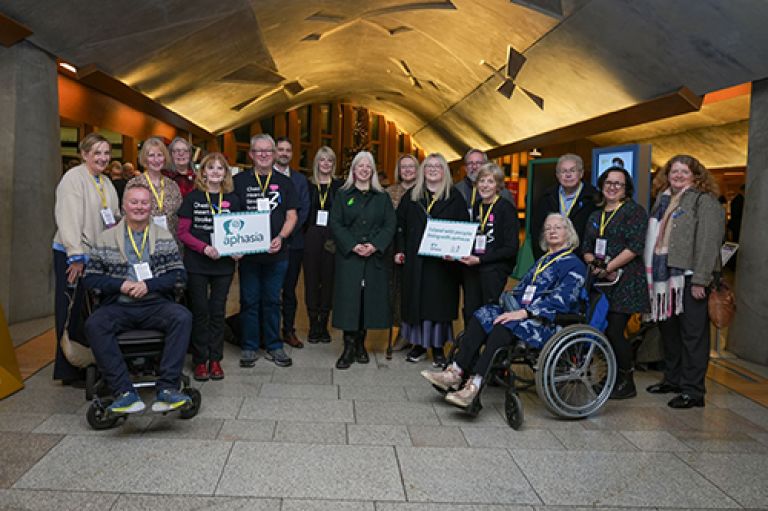
City St George’s researcher recognised in landmark Scottish Parliament debate on aphasia
The debate, held in December, marked the first time that aphasia had been discussed at length in the Scottish Parliament’s 26-year history
-
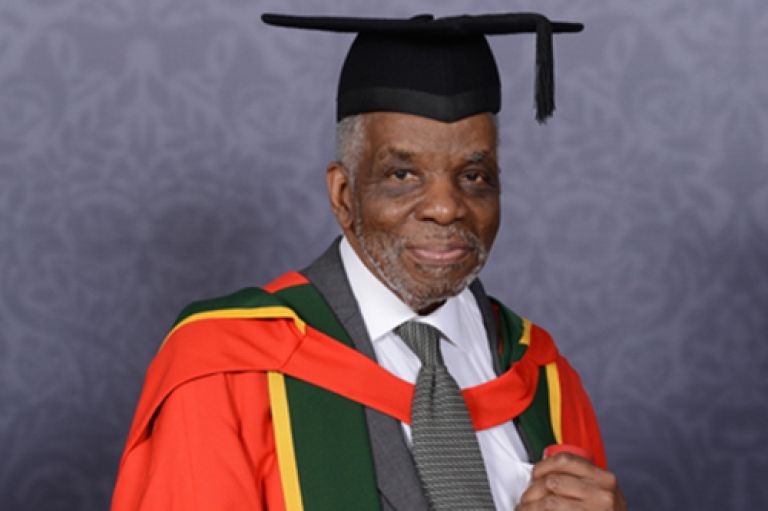
Remembering Dr Aggrey Burke FRCPsych (1943 – 2025)
A tribute to Professor Aggrey Burke FRCPsych In this tribute we honour Dr Aggrey Burke, who left a lasting legacy on City St George’s.
-

Strong link between high-engagement gambling and suicidality
Findings highlight the urgent need for targeted interventions and greater awareness of the heightened risks among people who engage regularly in a wide range of gambling types


