
Published
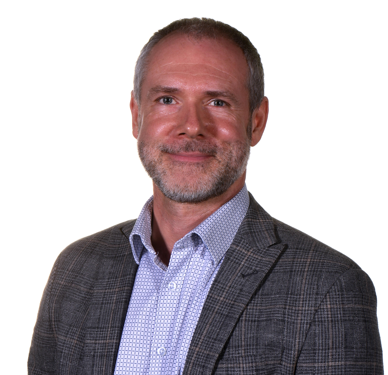 In 2017, formerly St George’s, University of London began a long partnership with Ulster University to help establish a new medical school for Northern Ireland. In April this year, the General Medical Council (GMC) granted Ulster degree awarding-powers for primary medical qualifications. Now that this work is concluding, we asked Partnership Lead Dr Robert Nagaj, for his reflections on the project and its impact.
What was Ulster University looking for from the partnership?
They were seeking a curriculum and a partnership that could help them not only meet the regulatory requirements of the GMC but also reflect their unique regional needs and values.
Our MBBS4 curriculum, with its strong foundation in clinical reasoning, early patient contact, and integrated professionalism, aligned well with their aspirations. What followed was a deeply collaborative effort to co-create something that would serve generations to come.
You were seconded for the period - what did that involve?
Being seconded to Ulster has been one of the most fulfilling experiences of my career. My role has evolved over the years - from supporting the original GMC application and helping to shape the curriculum delivery, to mentoring academic staff, contributing to governance and quality assurance structures, and helping embed a sustainable educational culture.
What challenges have been overcome to make the partnership a success?
Starting a medical school from scratch is never easy, and doing so during a global pandemic added unforeseen complexity. We had to be flexible, innovative, and resilient. Logistical and regulatory hurdles, recruitment of faculty, establishing clinical placements in a region where capacity was already stretched - each presented a real test. But perhaps the greatest challenge was creating something that felt truly owned by Ulster, even while drawing on an externally developed curriculum.
What has been the impact been on healthcare in the Ulster region?
The impact is already visible and will continue to grow. The Ulster School of Medicine is helping to address long-standing workforce shortages and is offering local students the opportunity to train and hopefully remain within the region. The presence of a medical school has also stimulated wider engagement and investment in the local health system, bringing renewed focus to education, innovation, and service development.
What are you most proud of?
I’m most proud of the relationships we’ve built and the trust we’ve earned. This was never just a curriculum sale - it was a shared endeavour to build something meaningful, inclusive, and lasting. Seeing the first students progress, develop their professional identity, and prepare for graduation in 2025 is a profound marker of how far we’ve come together. Knowing that I’ve played a part in that journey, and helped lay the groundwork for a new school to stand confidently on its own, is incredibly rewarding.
What will you miss most about working on the partnership?
I’ll miss the rich discussions, the problem-solving, and the sense that we were shaping something bigger than ourselves. But I also know that we’re leaving the school in strong hands, with a bright future ahead.
Who from City St George’s has helped to deliver the project?
This has taken an enormous amount of effort, and I am proud to have worked alongside such a talented team – Professor Philippa Tostevin, Dr Shehla Baig, Trupti Jivram, Gabriella Czochara, Professor Judith Ibison, Professor Hannah Cock and Mr Kevin Hayes – with valued support from Professor Rachel Allen, Derek Baldwinson and Soosan Atkins.
What is next?
We are now supporting the establishment of a new MBBS5 programme with the University of Hertfordshire. While the context and community are different, the values remain the same: a commitment to widening participation, excellence in clinical education, and genuine collaboration. The Ulster experience has laid a strong foundation for future partnerships, and I’m excited to bring that learning into this next phase - working once again to co-create a medical school that is innovative, inclusive, and grounded in the needs of its region. It is an exciting time - we are also exploring new partnership collaborations with other universities.