

Carl Whinder shares his tips for a smooth Clearing process
Published
Looking for a university place through Clearing? Head of Marketing and Student Recruitment Events at City St George’s, Carl Whinder, has shared his top tips to help you stay calm and find the right course for you.
What is Clearing and when does it open?
Clearing has changed over the years, from a process that supported students who didn’t achieve their grades to one students use for a variety of reasons, from changing course or university to applying for the first time.
If you think you may want to go into Clearing for whatever reason, then do some research before results day. Clearing opened at the beginning of July with many universities already having their Clearing courses listed on their website. Things do change, such as courses closing, but this does help to give you an idea of what is likely to be available, what the entry requirements will be and what the university process is.
How can I prepare for Clearing?
Make sure you double check the entry requirements and that your grades meet these. If a university is asking for specific tariff points Ucas has a tariff calculator on their website where you can double check how many tariff points your qualifications are worth.
This sounds like a very obvious thing to say but if you have your details ready, such as your Ucas ID number and your qualifications, this will make the process a lot smoother. Whether the university has a hotline you can call, a form to fill in or both, these details will be essential so make sure you have them before you start.
What shall I do if I don’t immediately hear back from a university or I don’t secure a place on the course I want?
In many scenarios you may get a decision on an application straight away. However, in some cases the university may request more information from you or require that you do some form of assessment, such as a telephone interview with an academic. If this is the case, don’t worry as it is just another part of the process of making sure the course is right for you.
If you are unsuccessful in securing a place on a course you are interested in don’t worry, there are many universities out there and many other courses to explore.
Other stories you might like
-

Clearing at City St George's: Students Maruf and Sabrina share their unique paths to university
"Clearing can be a great route for people who’ve simply changed their minds or priorities.”
-

Sabrina Abdow: International Political Economy BSc graduate on breaking barriers and accessible education
Londoner Sabrina shares her City St George's story, from volunteering to support other students at university to securing an impressive graduate job
-
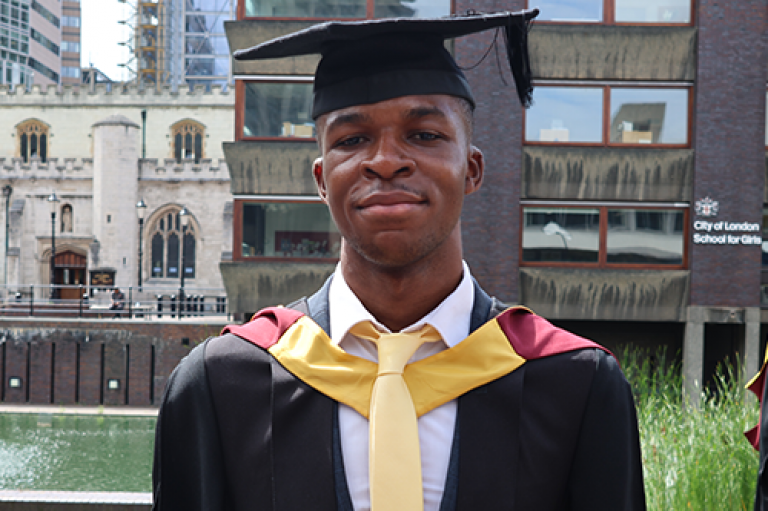
‘I didn’t think I could study finance at university, but now I’ve graduated with first-class honours’
Peter Otto, a BSc Finance student at Bayes Business School, has graduated with first-class honours despite initially believing university was out of reach


