

Ian Pace, Professor of Music, Culture and Society, City St George's, University of London.
Chaired by Professor Chris Rojek, Head of Department of Sociology and Criminology, City St George's, University of London
Abstract
The study of culture – understood in this context as bodies of artistic and intellectual work (including popular and folk culture), as a delimited subsection of the broader anthropological concept of culture encompassing most human activity – is with few exceptions the study of work which is created, disseminated and received in a social context. The possible relationships of such culture to such a context are rightly a central concern for scholars, not to mention those beyond the boundaries of academia who seek deeper forms of cultural understanding.
In his lecture, Professor Ian Pace will argue for the importance of technical engagement with culture in order to make sociological knowledge most acute, perceptive and revealing. Following a brief critical overview of some established approaches for such scholarly activity, he will present a series of short examples from diverse art forms, including music, visual art, literature and film, and investigate the possible social meanings, arguing how in each case their social meanings can be best understood with some technical knowledge of each medium and the immanent properties of the artworks in question.
From this, Ian will add some wider thoughts on paradigms and models which can be especially valuable for a non-reductive sociology of culture, one which entertains a two-way dialectical relationship between such culture and its context. One is that of ostranenie (defamiliarization) as theorised by Russian Formalist Viktor Shklovsky and others, later of immense importance to the school of neo-formalist film theory developed by David Bordwell and Kristin Thompson.
The second is Theodor W. Adorno’s particular formulation of artistic Autonomie (autonomy) as a type of negation of functionalism, which relates to the willingness to recognise an autonomous dimension to aesthetics in the writings on art of Leon Trotsky, Aleksandr Voronsky and Sergei Plekhanov. The third is George Bataille’s concept of la part maudite (the ‘accursed share’), that aspect of an economy which is surplus to human necessity, a form of excess energy or non-productive expenditure which can be directed towards luxury and the arts but equally to more destructive ends.
About the speaker
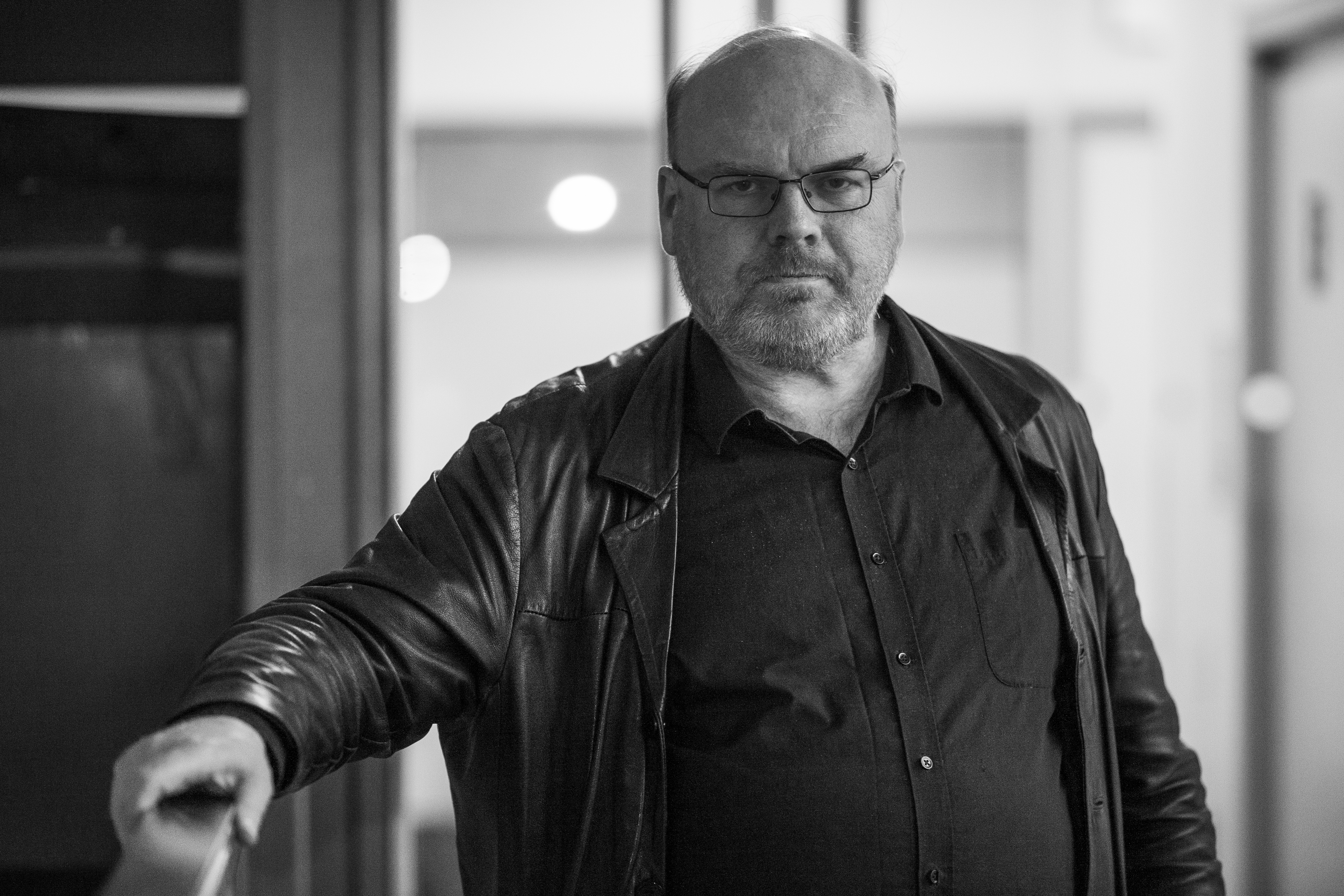
Ian Pace is a multidisciplinary scholar, performer, composer and writer who interacts with music, culture, sociology, history, politics and education.
He is a concert pianist who has performed around the world in many countries, premiered over 350 new works, working with many leading composers, and recorded over 40 CDs. As a musicologist, his expertise covers a range of areas, in particular new music and its institutions, especially in Germany during the Weimar, Nazi and post-1945 periods, aesthetics of romanticism, modernism and postmodernism, performance studies and practice-research, critical musicology, and music education.
More widely, he has undertaken extensive archival-based historical research in Germany and other countries into culture and cultural policy in the post-war era, denazification, and the role of the occupying powers, and also archival and interview-based research into specialist music educational institutions in the UK as part of wider work as a researcher into and campaigner against abuse in music, for which he has advised national inquiries.
He was born in Hartlepool in 1968, and studied at Chetham’s School of Music, The Queen’s College, Oxford (where his undergraduate degree was in Mathematics), and as a Fulbright Scholar at The Juilliard School in New York. Later he completed his PhD on the origins of post-war German new music and its infrastructure at Cardiff University.
He has taught at the London College of Music and Media, Southampton University, Trinity Laban and Dartington College of Arts, before moving to the Music Department at City St George’s in 2010. He was Head of Department in 2020-2021, and was made Professor of Music in 2021. In 2023 he took up a new position as Professor of Music, Culture and Society, and University Advisor – Interdisciplinarity in the Department of Sociology and Criminology.
He has published four books to date: the monograph Michael Finnissy’s The History of Photography in Sound: A Study of Sources, Techniques and Interpretation, published by Divine Art in 2013, and the edited volumes Uncommon Ground: The Music of Michael Finnissy, published by Ashgate in 1998; Critical Perspectives on Michael Finnissy: Bright Futures, Dark Pasts, published by Routledge in 2009, and Researching and Writing on Contemporary Art and Artists, published by Palgrave Macmillan in 2010.
He is currently working on a new biography of Karlheinz Stockhausen for Reaktion Books, and new books on musical modernism in Germany during the Weimar and post-1945 eras. He has also published widely in a range of academic journals, including Music and Letters, Journal of the Royal Musical Association, Music Analysis and others, and much for a wider audience in London Review of Books, Times Higher Education Supplement, The Critic, The Conversation, the Telegraph, the Spectator, International Piano and Music Teacher.
In 2018, BBC Radio 3 broadcast a special two-hour issue of the programme Here and Now devoted to his work, the first time this had been done for a single artist. He also worked with the director Bettina Ehrhardt on the film Wir fangen ganz von vorn an: Neue Musik für ein Deutschland nach dem Krieg (2020). He is a thrice-elected trustee of the Society for Music Analysis, for which he is current Awards Officer.
He is also co-convenor of City Academics for Academic Freedom, and a founder member of the London Universities’ Council for Academic Freedom, for which he acts as Secretary. He is also a composer; recent works include Das hat Rrrrasss… for speaker and piano (2018); the piano pieces Thirty for Grace (2019), Clothcomposers (2019) and Schneeriss (2020); the cycle for singer and ensemble Matière: Le palais de la mort (2021); and Lancashire Rock (2022) for clarinet, percussion and piano.
Attendance at City St George's events is subject to our terms and conditions.
-

Clerkenwell campus
City St George's, University of London
Northampton Square
London EC1V 0HB
United Kingdom