
Artur d’Avila Garcez, Professor of Computer Science, shares how his recent proposal for a framework on AI accountability may provide insights.
At their recent summit in France, G7 leaders sat down to a working lunch with the heads of OpenAI, Google DeepMind and Anthropic. The message from Sam Altman, Demis Hassabis and Dario Amodei was unanimous on one point: G7 governments need to act on the governance of AI, and fast.
However, beyond that observers such as Artur d’Avila Garcez, Professor of Computer Science at City St George’s, University of London, believe that consensus collapsed. He shares:
Garcez argues that the divergence is exactly why his recent framework paper in pre-print matters. He says of the paper, co-authored with Chris Percy, University of Warwick, and entitled, ‘The AI Accountability Ecosystem in the Era of Large Language Models’:
He argues that what makes the framework especially relevant is that it sidesteps the exact fault line the three CEOs got stuck on:
Garcez believes that is part of the problem:
Crucially, Garcez argues the mechanisms of the framework he proposed with Percy (benchmarking, certification, incident reporting, contractual assurance up and down the supply chain) don't need a G7-wide treaty or a single dominant coalition to start working.
Related schools, departments and centres
Other stories you might like
-
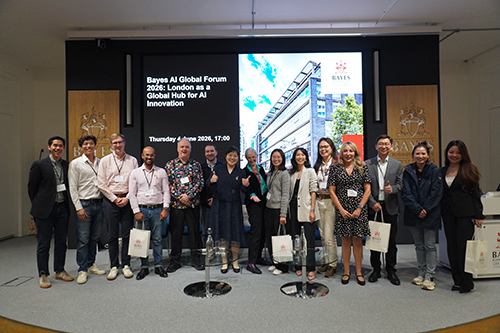
Bayes AI Global Forum 2026: London as a Global Hub for AI Innovation
Bayes shines light on capital’s influence across the world as a centre for innovation.
-
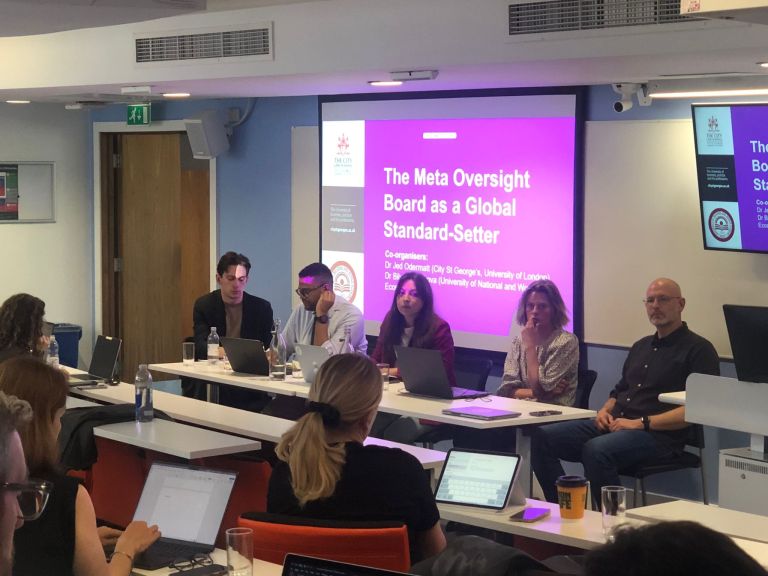
Moderating Meta: The City Law School hosts symposium on the Oversight Board as a global standard setter
Academics from across the globe joined representatives of the Oversight Board to discuss its dedicated role in the online content moderation of social media giant, Meta.