
City St George’s hosts notable journalists and barristers to discuss their FOI successes and what needs to be adapted for a modern world.
By Eve Lacroix (Senior Communications Officer), Published
“Freedom of Information (FOI) is a key tool for the protection of human rights,” said Alex Goodman KC at City St George’s, University of London during a panel event.
The talk was co-organised by the Centre for Journalism & Democracy, the Department for Journalism, and the City Law School and commemorated the 25th anniversary since the Freedom of Information Act (FOIA) came into effect.
Dr Glenda Cooper, Reader in Journalism, introduced the event and moderated the panel, which was made up of:
- Heather Brooke, freelance journalist, author of Your Right to Know: A Citizen’s Guide to Freedom of Information, former programme director for the MA in Investigative Journalism at City St George’s
- Jenna Corderoy, journalist at Democracy for Sale, visiting lecturer in investigative journalism at City St George’s
- Mirren Gidda, barrister at One Pump Court Chambers, former investigative journalist at Liberty Investigates
- Alex Goodman KC, barrister at Landmark Chambers.
Using FOIA for public accountability and scrutiny: success stories
Heather Brooke was one of the first notable journalists to use FOIA for public scrutiny and accountability.
Originally hailing from the US, where she’d always had access to a wide array of information as a police reporter, she was shocked by the “disdain” the British public were treated with in their lack of access to information.
She fought for years to use FOIA to ask Parliament to release details of Members of Parliaments (MPs’) expenses, going all the way through tribunals up to a High Court ruling in 2008. The documents revealed that hundreds of MPs were claiming money for everything from second home renovations to duck houses and moats.
It led to a number of MPs and the Speaker of the House standing down, as well as 392 politicians being ordered to repay £1.3 million.
While at Liberty Investigates, now-barrister Mirren Gidda used FOIs to racially disproportionate policing.
Mirren found that while the Metropolitan Police announced a programme to tackle London's “most violent offenders”, the reality was that 61 per cent of the people targeted were 18 or younger. 61 percent of the people targeted were also Black. In another investigation, Mirren revealed that people of colour were 54 per cent more likely to receive fines for breaching Covid rules than white people. While the National Police Chiefs’ Council (NPCC) initially disputed her reporting, the organisation later acknowledged disproportionality in the fines. A further investigation by Mirren and the Liberty Investigates team found the number of asylum seekers dying was almost double that which had previously been reported by the Home Office.
“With FOI, you can get behind what an authority is saying in press releases,” she said. “Treat press releases with scepticism.”
Alex Goodman KC supported the news website Democracy for Sale on bringing an Environmental Information Regulations (EIR) case to tribunal, which revealed that Welsh government officials had attended multiple lobbying meetings with car manufacturers who were attempting to slow down its decarbonisation process.
Jenna Corderoy won a tribunal case which saw the release of research conducted by the European Research Group (chaired by Jacob Rees Mogg MP), arguing that as it influenced government policy around Brexit, it was of public interest. She was shortlisted for Private Eye’s Paul Foot Award for an investigation into the government’s ‘Clearing House’ for FOI requests. It revealed the state of freedom of information in 2021, which found cases of stonewalling and of journalists being put on blacklists for making FOI requests.

Tried and tested methods for submitting successful FOI requests
Heather Brooke worked with lawyers to hone her requests into “legalese”.
Authorities were more likely to comply when the language was boring because they thought that there was no story hidden within it. Lawyers can also perform a type of “legal jiu jitsu so the public authorities can’t get out of [honouring the FOI request]”.
Mirren Gidda’s advice boiled down to following process, being as precise as possible in every FOI request and drafting it in a way to try and pre-empt refusals, particularly on grounds of cost. She said:
Moving forward: adapting to tech, enforcement “with teeth” and the Hillsborough Law
Moving forward, Heather Brooke hopes to see even more information available and digitised.
Late responses or noncompliance is enforced by the Information Commissioner’s Office (ICO) – the UK’s independent regulator for data protection and information rights – and she hopes to see it given “more teeth” by enforcing FOIA with fines on public authorities.
Mirren Gidda believes authorities should have a staffed FOI request team, whose role is to review and answer these requests. Too many requesters face waits well over the 20-working day timeframe.
Jenna Corderoy believes the law needs to be adapted to 2025. She raised the issue of today’s governments outsourcing services to private companies, which cannot be held to account by FOIA. This includes contracts for personal protective equipment – such as face masks – being given to foreign, private companies during the Covid-19 pandemic. Furthermore, in 25 years, technology has changed immensely, with many ministers relying on platforms like Signal and WhatsApp which have disappearing messages and cannot be put under FOI.
Alex Goodman hopes the proposed Hillsborough Law – also referred to as the Public Office (Accountability) Bill) – will address the issue. The Bill aims to impose a duty of candour on public authorities and officials, requiring them to be honest, ethical and cooperative when supplying information.
Related schools, departments and centres
Other stories you might like
-
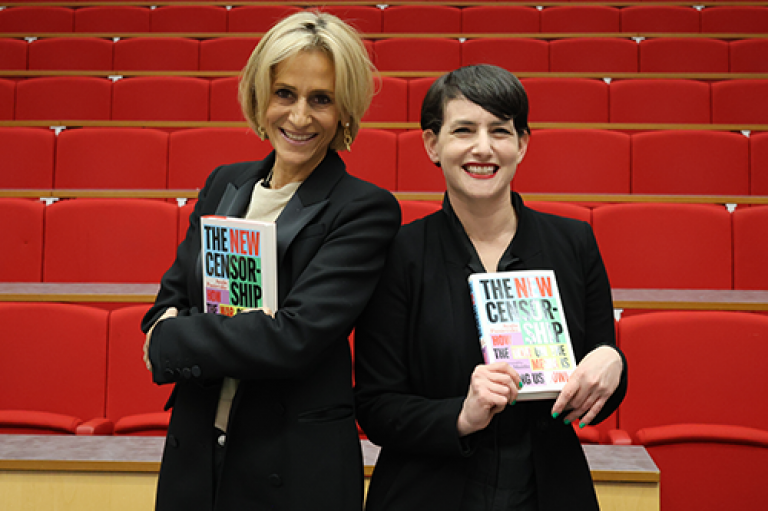
Journalism Under Attack: Emily Maitlis in conversation with Ayala Panievsky
Emily Maitlis joined City St George's academic and author Dr Ayala Panievsky to discuss the challenges facing journalists today and what can be done to still hold power to account
-

“Solid fact has cracked”: the 2025 UK Media Freedom Forum makes plain how attacks on journalism are affecting democracy
City Journalism cohosts the Media Freedom Forum 2025, along with the Foreign Policy Centre, Justice for Journalists and International Bar Association’s Human Rights Institute.
-

The City Law School academics debate the role of UN human rights monitoring body in minority rights protection
Dr Lilija Alijeva and Professor Tawhida Ahmed host the Elected United Nations Human Rights Committee Member, Professor Yvonne Donders, at the DiverCity Workshop 2025.


