

City St George’s, University of London hosts conference with North London Citizens and asylum seekers to discuss how collaboration is helping support refugees.
By Eve Lacroix (Senior Communications Officer), Published
City St George’s, University of London hosted the “Closing the Gap” roundtable to discuss issues asylum seekers and refugees face in North London.
Attendees included local leaders, academics, charity and the policy sector workers, faith groups, asylum seekers, local government, including staff from the Barnet and Islington Councils and from TfL.
The conference was co-organised by:
- Dr Hallam Tuck, Lecturer in Criminology in the School of Policy & Global Affairs
- Tamara Joseph, Refugee Projects Coordinator from the Finchley Progressive Synagogue
- Alaa Al-Abrahim, an advisor at the independent refugee charity New Citizens Gateway.
The Conference


The roundtable included talks from Samiulhaq Sadat and Khadija Ahmed, two refugees who are leaders on a London bus campaign backed by community organiser alliance Citizens UK.
The event was sponsored by City St George’s Centre for Justice Reform, which Dr Tuck is a member of.
Dr Tuck has spent the past year working with North London Citizens, a chapter of the Citizens UK refugee charity focused on supporting refugees and asylum seekers in Barnet, Brent, Enfield, Harrow and Haringey.
Together, Dr Tuck and North London Citizens conducted a series of listening exercises with more than 100 people seeking asylum as well as local community groups to understand the key issues they faced. This listening identified access to public transport and support with the transition out of asylum accommodation as core challenges.
Community organisers and refugees Khadija and Sadat spoke about a Valentine’s Day event they organised in which over 100 campaign members gathered at London City Hall with flowers and asked Deputy Mayor for Transport Seb Dance for a “date” to discuss the issue of bus fares. The campaign work has translated to a change in TfL policy which allows asylum seekers to use their Application Registration Card (ARC) to as a form of ID to apply for bus concessions.
Once a refugee application is approved, asylum seekers are given only 42 days to get an e-visa, open a bank account, get a national insurance number, apply for universal credit and secure accommodation. Securing accommodation during this period is especially difficult for single men who are at the bottom of the list of priority for council housing.
Alaa and Tamara shared how their organisations have set up a social club to support people prepare for the transition out of asylum accommodation. This group shares meals in the Finchley Progressive Synagogue and has planned outings to cultural locations to help these single men build community, share their experiences, and gain greater cultural awareness of their new home.
Tamara was heartened to share that despite the antisemitic attack in Golders Green on Monday 23 March, there were still 15 volunteers hosting the Men’s Group on Tuesday evening.
“Over the course of this project, I have learned a lot from folks involved with Citizens UK about community organising,” said Dr Tuck. “One thing I've learned is that turnout is 80 per cent of the action, and the fact that we have such a good group of people in the room today is a really good sign.”
Related schools, departments and centres
Other stories you might like
-

Tax rises and benefit cuts are on the horizon as Reeves prepares the UK for a bad-news budget
Professor Steve Schifferes writes for The Conversation about Chancellor Reeves' pre-Budget press briefing and what lies ahead.
-

Migrant health research informs new report into healthcare access for people seeking asylum
Research from the migrant health group at City St George’s has provided critical insight into the British Red Cross’s report, Delivering with Dignity.
-
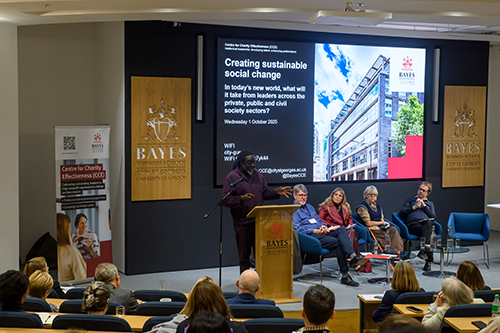
Charity leaders need more than good intentions, peer says
Bayes' CCE hosted a panel discussion on charity, public and private sector leadership that can deliver sustainable social change.

