

By Hamish Armstrong (Senior Communications Officer), Published
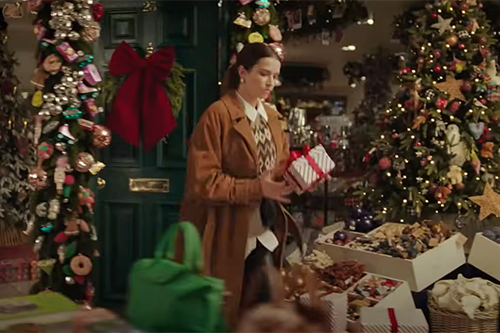
The John Lewis Christmas advert, for many a traditional signal for the beginning of the festive season, has aired for the first time in 2025.
This year’s commercial, with strapline ‘If you can’t find the words, find the gift’, depicts a father reconnecting with his son through a realisation that the nostalgia he gets from unwrapping a Christmas gift cannot compete with affection.
Experts from Bayes Business School commented on the messages John Lewis tries to convey, and how the advert has become such a phenomenon.
Renewing the conversation about toxic masculinity
Dr Thomas Robinson, Senior Lecturer in Marketing at Bayes, says the advertisement’s addressing of a key societal issue is carried out positively.
“This year’s John Lewis advert is a powerful and clever critique of nostalgia, while looking to the future,” he said.
“The father’s immersion into the past is obviously related to his own midlife crisis, losing himself in a 90s dance floor before realising that it is all in his head. He quickly shakes it off and repairs his broken relationship with his son.
“The past should not be escapism, but a means to build relationship in the present and construct a new future. For the father, he understands that the dancefloor fun he used to have has nothing on the love he feels for his boy.
“The cultural context for this commercial renews the conversation we are having about toxic masculinity and the Netflix drama Adolescence. It attempts to normalise men having feelings, showing affection to each other and caring.
“In this sense, the father's insight stems from generational trauma between fathers and sons that invariably recreates a troubled youth for young men – and then sets the next generation's own midlife crisis. The commercial speaks to the hope of breaking that chain of toxicity.
“It criticises nostalgia in a very warm way.”
“Portrayal of modern fatherhood is unusual in advertising”
Dr Sabrina Gottschalk, Lecturer in Marketing, said although viewers might be disappointed at a lack of festive stardust in this year’s edition, the retailer has demonstrated its credentials as a supportive family brand.
“John Lewis Christmas adverts have become a clear marker of the start of the festive season, and customers eagerly await their release each year,” Dr Gottschalk said.
“Several aspects stand out in this year’s edition. Firstly, the story’s focus on a father–son relationship is unusual. Such dynamics are often underrepresented in advertising or shown through clichés such as the clumsy or emotionally distant dad. Here, modern fatherhood is portrayed as emotionally engaged and vulnerable, which feels much closer to real life today. This can help John Lewis stay emotionally in tune with modern family life.
“Secondly, the advert is a more realistic take on Christmas, recognising that the season often brings high expectations that can clash with reality including family tensions, old grievances, or struggles to connect. By showing how thoughtful gifting can help bridge those emotional gaps, John Lewis comes across as a supportive brand that understands both the highs and lows of family life.
“While the tone feels more mature and grounded than in some past years, this realism may disappoint some viewers hoping for a more traditional burst of festive sparkle.
“Lastly, the use of 90’s music and vinyl culture taps into nostalgia, one of the most powerful levers in marketing. Research shows that nostalgia can enhance feelings of social connectedness, brand warmth, and even willingness to purchase. The exclusive ‘Where Love Lives’ vinyl release at John Lewis extends the campaign, turning the story’s emotion into something tangible customers can own.”
All comments can be attributed to Dr Thomas Robinson and Dr Sabrina Gottschalk at Bayes Business School.
Other stories you might like
-
What makes the John Lewis Christmas advert so special?
With the John Lewis Christmas advert now on air, Dr Sabrina Gottschalk, Bayes Business School Lecturer in Marketing, explains the appeal of the annual phenomenon.
-

Toying with employee ownership: Bayes experts react to The Entertainer handing over control to its workforce
Business School academics discuss the benefits of employee ownership and the importance of preserving values.
-

Research reveals why receiving food before others is a source of discomfort for social diners
New research shows that diners feel obliged to wait when their food is served first – even though they would happily encourage others to start eating if roles were reversed.