

By Hamish Armstrong (Senior Communications Officer), Published
A new report co-authored by Bayes Business School’s Centre for Charity Effectiveness, led by the London Foundation for Banking & Finance (LFBF), has highlighted key challenges in the volume, quality and accessibility of domestic financial literacy programmes.
The report, titled Accelerating Progress: Financial Capability in the UK, examines the most vulnerable demographic groups and makes five recommendations for accelerating progress. Research was conducted by Sarah Dryden (MSc Philanthropy, Grantmaking and Social Investment 2024), Director of Research, LFBF, working in partnership with Paul Palmer, Professor of Voluntary Sector Management at Bayes.
With financial education not currently a recognised sector, the report maps and assesses support currently on offer. The initial analysis included a market scan of 2,000 organisations, with research detailing the work of more than 400 bodies – including 120 in the charitable sector, 50 banks, 30 building societies, 90 credit unions, and 90 private sector and tech companies.
Key findings from the paper include:
- UK financial literacy remains persistently low in UK-focused and international studies. Thirty-nine per cent of UK adults (20.3 million people) do not feel confident managing money.
- The UK has significant gender, education, income and ethnic gaps in financial literacy, of up to 45 per cent when demographic factors intersect.
- Millennials possess lower financial literacy than might be expected, and both the young and the elderly are particularly vulnerable to the risks of financial illiteracy.
- Volume is not quality. Good education is hard to find, reputable education hard to assess; untrustworthy education is unregulated; multiple initiatives overlap.
The report also makes five main recommendations about how to accelerate progress:
- Impact requires scale, but tailoring programmes is equally critical.
- Interventions need to be early, but also relevant to individual circumstances and life stages.
- Making better use of technology and innovative learning practices such as experiential learning and gamification could have a positive impact.
- People need both the ability (education) and the opportunity to act (inclusion).
- There is significant potential for better partnership and consolidation across existing services.
The report was launched at a networking event at Bayes on the evening of Wednesday 29 January.
Sarah Dryden said:
“While the amount of financial education might be encouraging, it is also concerning.
Persistently low levels of financial literacy across the UK make clear that even effective interventions from reputable providers are not working sufficiently well, nor together, to move the dial far or fast enough.
“Even as a professional researcher, simply finding, let alone understanding or applying, high quality information is a challenge. One of the most important outcomes of this research is therefore to document the wider landscape of financial education so that this big picture can now inform next steps.”

Professor Palmer said:
“Education is one of the founding principles of charity. This timely and authoritative report on financial literacy from LFBF identifies key issues facing the UK and how the voluntary sector can assist in resolving them.
“The Centre for Charity Effectiveness at Bayes, as an enabler and capacity builder for the sector, was delighted to support this research.”
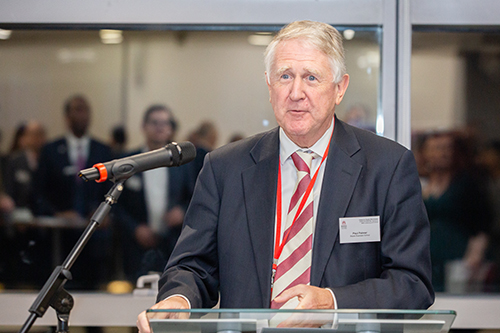
Shelley Doorey-Williams, CEO, London Foundation for Banking & Finance, said:
“Everyone should have the opportunity to understand money, and be able to put it into practice, with access to affordable, inclusive financial services and products.
“The LFBF has a proud 145-year history of raising awareness of education in finance, and an ambitious vision for building future financial capability across the UK.
“We are committed to providing evidence that will help to accelerate progress, and we are hugely appreciative of the rigour of the research conducted by Sarah, the excellent guidance provided by Professor Paul Palmer and the much-valued support of Bayes’ Centre for Charity Effectiveness.”
Download a copy of the report, Accelerating Progress: Financial Capability in the UK.
Other stories you might like
-
EDI and leadership development at the top of the agenda for charity leaders
The Centre for Charity Effectiveness released a report on future charity Chairs and hosted a panel discussion at Bayes Business School (formerly Cass).
-
Reflections Forward: Perspectives on leadership in a changing context
Chief Executives Paul Streets (Lloyds Bank Foundation) and Sarah Vibert (NCVO) discussed leadership in the charity sector at a CCE event.
-

Experts in the field: Charity management academics to advise leading countryside non-profit
Centre for Charity Effectiveness experts awarded Knowledge Transfer Partnership grant with CPRE.