
City St George’s vision scientist recognised among the top 0.5% of scholars worldwide
Professor John Barbur, who is Professor of Optics & Visual Science at City St George’s, University of London and a leading figure in the field of vision science, has been recognised as a top researcher by ScholarGPS, placing him in the top 0.5% of scholars worldwide.
This distinction acknowledges his significant contributions to optometry and allied health, particularly in colour and mesopic vision research. Over his distinguished career, Professor Barbur has authored over 250 publications, and his work has garnered more than 7,000 citations, with an impressive h-index of 45.
International recognition for vision science
Professor Barbur is well-known for his pioneering research on colour and mesopic vision. His work has not only advanced academic understanding but has also had far-reaching practical implications, particularly in the development of advanced vision tests such as the Colour Assessment and Diagnosis (CAD) test. Used worldwide, this test plays a critical role in assessing vision in professions where precise colour perception is essential, such as aviation and firefighting.
Scientific advancements
In addition to the ScholarGPS recognition, Professor Barbur was awarded the Newton Medal by the Colour Group (Great Britain) earlier this year. This prestigious medal, awarded biennially since 1963, recognises outstanding contributions to the field of colour science. Professor Barbur received the medal for his decades of work on chromatic mechanisms and their application in colour vision assessments.
Professor Barbur’s contributions to vision science span several decades, during which he has made numerous advances in both fundamental research and practical applications. His early work on camouflage provided key insights into luminance and colour signal processing, which has greatly enhanced our understanding of chromatic mechanisms. This research has had profound implications for clinical and occupational assessments of colour vision.
Among his most notable achievements is the development of the P_SCAN system and a series of Advanced Vision and Optometric Tests (AVOT). These tools, including the CAD test, are widely used to assess vision impairments and detect changes in visual function caused by degenerative disorders of the eye and brain. These tests are also essential in evaluating the effectiveness of treatments in clinical trials.
Impact on public health and safety
Professor Barbur’s work has significantly impacted both public health and occupational safety. His AVOT tests are now used globally to assess vision in high-demand professions such as aviation, firefighting, and law enforcement. These tests are also helping to detect early-stage degenerative conditions, offering valuable insights into disease progression and treatment efficacy.
Reflecting on his ScholarGPS recognition, Professor Barbur said: “Our work at City St George’s has not only advanced the scientific understanding of vision but has also led to practical applications that are now used globally in occupational and clinical vision assessments.”
Related schools, departments and centres
Other stories you might like
-

Understanding how human vision adapts to different light levels
Research by Professor John Barbur and colleagues included in the leading Reference Collection in Neuroscience and Biobehavioural Psychology
-

City St George’s hosts optometry and vision science congress
The British Congress of Optometry and Vision Science (BCOVS) brought together optometry professionals, researchers, and students for two days of networking, discussion, and knowledge sharing
-
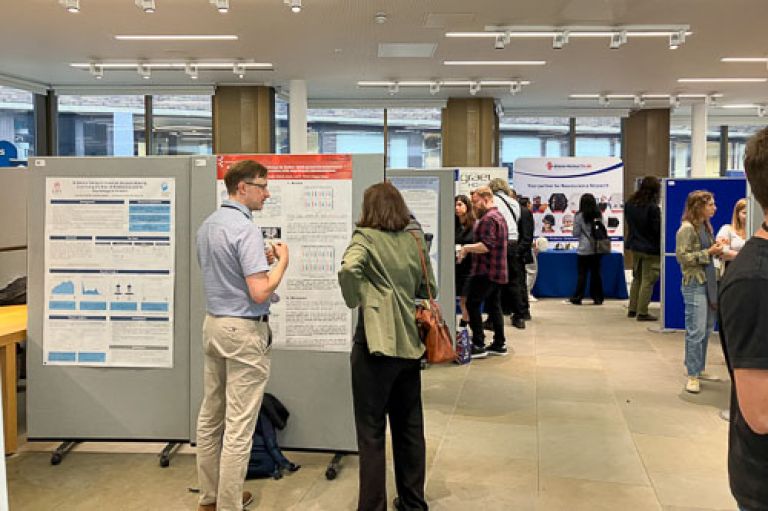
Leading neuroscience conference delivers new perspectives on laughter, helping others, and cognitive flexibility
Experts presented groundbreaking research at the 2024 British Association of Cognitive Neuroscience (BACN) annual meeting


