

Munish Chauhan
From St George’s Medical Student to Military Surgical Leader: A Continuing Journey of Service and Self-Leadership
Major Munish Chauhan MBBS, MRCS, DMCC, PGDip, RAMS
- Military General Surgery Registrar (British Army)
- Senior Research Fellow – Centre for Army Leadership
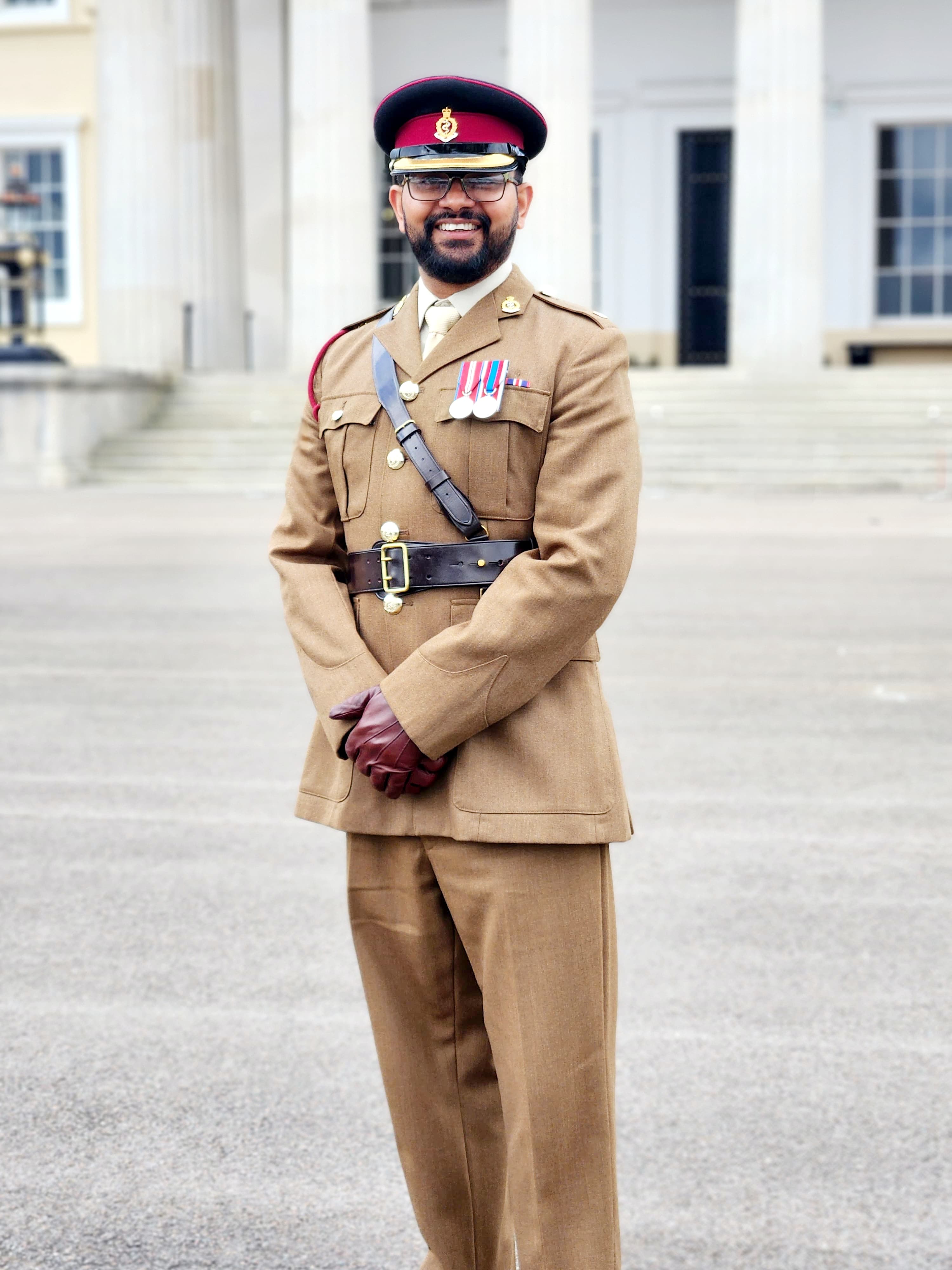 I am Major Munish Chauhan, a General Surgery Registrar in the Royal Army Medical Services, and a Senior Research Fellow with the Centre for Army Leadership. I qualified as a doctor from St George’s, University of London in 2017, and since then my career has evolved across surgery, military medicine, leadership, and coaching. What began as clinical training has become a broader journey centred on service, responsibility, and developing others in complex environments.
During this period of sustained challenge since qualifying as a doctor from St George’s, I became acutely aware of how well prepared I was. Thanks to my training at St George’s, I found myself equipped to manage both the clinical and non-clinical demands of these roles. The emphasis on strong clinical fundamentals, structured thinking, teamwork, and professional values translated directly into operational effectiveness and leadership confidence.
Over the past eight years, I have worked as a General Duties Medical Officer in the British Army and across NHS general surgery in the Oxford Deanery and at Frimley Park Hospital. This dual role of NHS Surgeon and deployed Military Doctor requires adaptability, sound judgement, and emotional intelligence. It involves leading teams under pressure while remaining clinically grounded and ethically anchored.
One of the most formative phases of my career involved overseas deployments and operational roles across Estonia, Germany, and multiple locations within the UK during the COVID period. In these roles, I was often responsible for the healthcare of over 1,000 soldiers in remote and resource-limited settings. The clinical and leadership challenges were significant. Decisions had to be made with incomplete information, communication needed to be precise, and responsibility was constant. These experiences were demanding, but also deeply enjoyable and professionally defining.
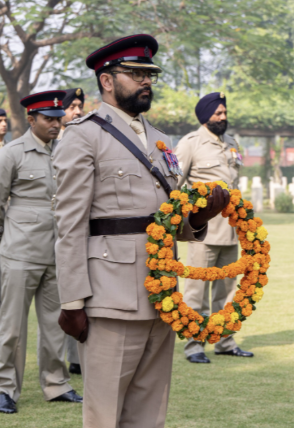 Another pivotal chapter in my development has been my professional engagement with India, where I led a highly successful tour. This included organising and leading the first Remembrance Parade at the Delhi War Museum, an achievement that required planning, coordination, and cross-cultural leadership. Growing and progressing as an Indian-born surgeon within the British Army has presented unique leadership challenges. Navigating identity, expectations, and responsibility within a highly structured institution required resilience, self-awareness, and emotional maturity.
My self-leadership journey, grounded in spiritual beliefs and guided by a serve to lead philosophy, has consistently anchored me during moments of uncertainty. That sense of purpose has acted as a north star, providing clarity and direction when external pressures were high.
Alongside clinical work, my role as a Senior Research Fellow at the Centre for Army Leadership focuses on self-leadership, decision-making under pressure, resilience, and metacognition. This research has reinforced a core belief that effective leadership in medicine begins internally. Technical competence is essential, but clarity of thought, emotional regulation, and reflective practice sustain performance over time.
Coaching has become central to my professional identity. I actively mentor junior doctors, medical students, and military colleagues, supporting their development through reflection, purposeful challenge, and psychological safety. My coaching philosophy is simple and experience-led. When individuals develop self-awareness and confidence, performance follows naturally.
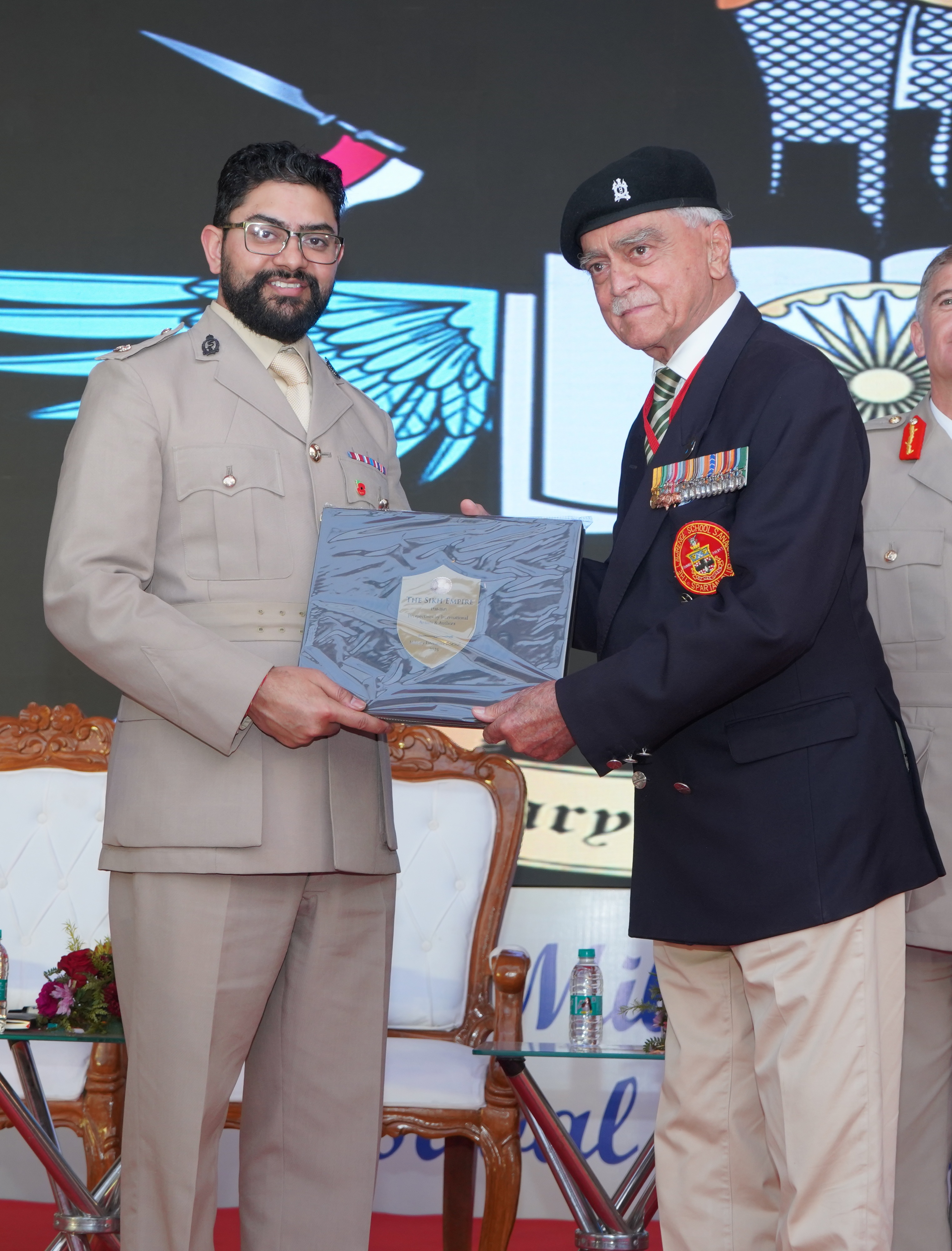 I have been fortunate to receive multiple professional and leadership recognitions in recent years, including a Fellowship in Leadership from the British Army, NHS Clinical Excellence recognition, the Dr B.R. Ambedkar Achievement Award from the House of Parliament, and national commendations for service and contribution. These achievements reflect collective effort rather than individual success. They are the outcome of disciplined self-leadership, strong teams, and environments that encourage growth.
This journey is largely due to the lessons learned at St George’s. Whether in clinical medicine or clinical leadership, the training provided a foundation that has endured across demanding and unfamiliar settings. St George’s did not simply prepare me to practise medicine. It prepared me to lead within it.
For prospective medical students, particularly those considering service-oriented or non-traditional career paths, I would emphasise that medicine offers breadth, depth, and purpose beyond a single linear route. A career combining surgery and military medicine is demanding, but it develops leadership early, builds resilience, and offers a profound sense of contribution.
I would wholeheartedly recommend St George’s, University of London to those seeking both personal and professional development. It is a place that shapes clinicians who can think critically, act compassionately, and lead with integrity.
St George’s was where my journey began. The lessons learned there continue to guide how I serve, how I lead, and how I support the development of others.