

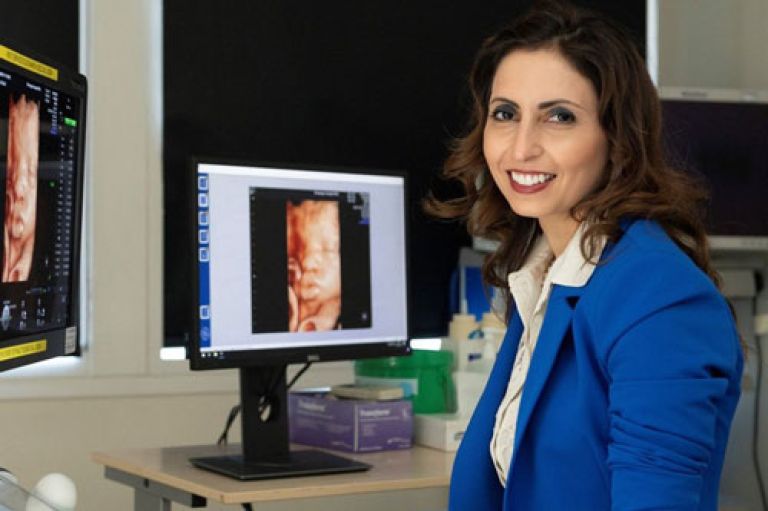
The researchers:
Research status:Ongoing
In summary
Primary lymphoedema is a rare, lifelong condition that causes painful swelling due to a malfunctioning lymphatic system.
Despite its severity, treatment options remain limited. At St George’s Hospital, Dr Pia Ostergaard and Dr Kristiana Gordon are leading research into the genetic causes of this condition, aiming to improve diagnosis, monitoring, and ultimately, treatment.
Their work is already redefining how this complex disease is understood.
What did we explore and how?
The research team observed recurring features among patients with primary lymphoedema and began grouping individuals based on their clinical characteristics.
This approach led to the identification of over twenty categories of the condition. By studying these groups in detail, the researchers are uncovering the genetic mutations responsible for each subtype.
Through close collaboration between clinical and academic teams at St George’s Hospital, the researchers use patient data and genetic analysis to investigate how specific gene changes lead to problems in the lymphatic system.
Their work is supported by funding from the Medical Research Council and the British Heart Foundation.
Benefits and influence of this research
This research is already transforming care for people with lymphoedema. By identifying genetic mutations linked to specific forms of the disease, clinicians can now offer patients more accurate diagnoses and anticipate possible complications.
For instance, certain gene variants not only cause lymphoedema but also increase the risk of developing leukaemia. Early detection of these variants allows doctors to monitor and treat patients proactively.
The ultimate aim is twofold: to give every patient a personalised, genetics-based diagnosis, and to develop targeted treatments that address the root causes of the disease - moving beyond symptom management toward real, lasting solutions.
This work is a critical step toward giving patients with primary lymphoedema renewed hope for a better quality of life.
What's happening
-
Event
Nov 04
Postgraduate Open Evening (Clerkenwell Campus)
Join us at our Postgraduate Open Evening to learn more about our postgraduate courses and discover all the benefits of studying at City St George's, University of London.
, 16:45 – 19:00
Location: Clerkenwell campus
Audience: Prospective students
-
News

Golden advice from alumni on securing a graduate job
Recent graduates across industries share their strategies for entering the workforce.
-
News
Largest study to date finds no detectable increase in pregnancy risks following GLP-1 exposure around conception
Study offers reassurance after unintended exposure, but states more safety data is needed.

