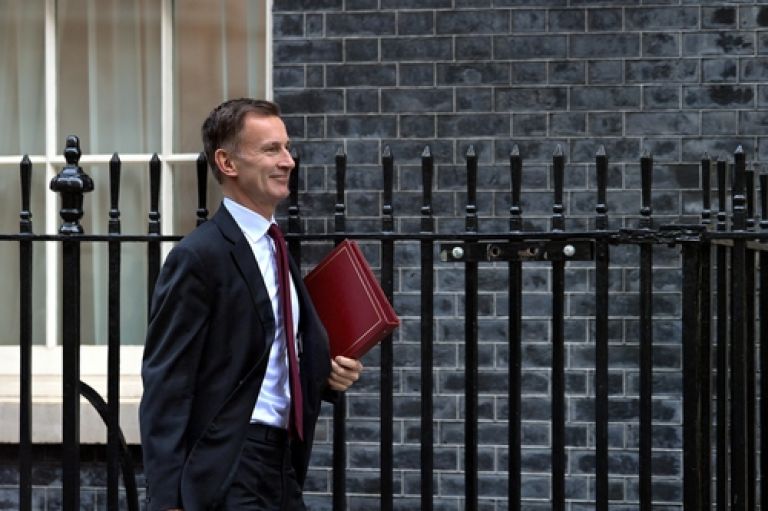
Chancellor Rachel Reeves delivered her spring statement in parliament on Wednesday 26 March 2025.
Reeves' statement included reforms to the welfare system (with cuts announced to a Personal Independence Payment (PIP), a benefit some people with disabilities receive), housebuilding plans, and a mandate to make the UK a defence industrial superpower.
The Office for Budget Responsibility (OBR) halved its economic growth forecast to 1% for 2025. It also estimated that the Labour party's planning reforms could boost growth by 0.25% over five years.
Spring Statement - 26 March 2025
Academics from across City St George's, University of London reacted.
Reeves resorted to tricks and ‘efficiency savings’, says Professor Steve Schifferes
Rachel Reeves has announced a series of tweaks to her spending plans to address the economic situation which has meant that she is in danger of breaking her self-imposed fiscal rules. The chancellor was at pains to say that these rules are "non-negotiable".
But these are unlikely to tackle the deeper problem -- that in the short term she cannot rely on economic growth to square the circle of Labour’s three contradictory election pledges. These were more spending on public services, lower taxes, and strict fiscal rules.
The UK, in fact, is particularly vulnerable to the disruption of global trade that is likely to result from US president Donald Trump’s tariff wars. And the productivity gains from her long-term infrastructure plans will take years -- if not a decade -- to translate into higher growth.
Like many chancellors, Reeves has resorted to various tricks -- such as counting money moved to the defence budget to build tanks and aircraft as capital spending (and therefore exempt from the borrowing rules). And she has called for large "efficiency savings" in the civil service and government departmentsthat are unlikely to be realised.
But the biggest savings are coming from bigger than expected cuts in disability and other welfare payments, reducing the income of over 3 million people. This is upsetting many Labour MPs. Her big sweetener -- £2 billion for social housing next year -- is actually less than that already allocated by the previous Conservative government.
Crucially, the further savings likely to be demanded in the spending review (the detail of which will be announced on June 11) from unprotected departments including local government, justice and environment, will certainly look a lot like a return to austerity.
In the end -- and possibly as soon as the autumn budget – Reeves may well have to accept that as well as spending cuts, she will have to consider tax increases and possibly even revising her fiscal rules.
Otherwise, she will remain at the mercy of the markets and the forecasters. Any long-term strategy will be strangled by the need to continually adjust policy to meet the ‘fiscal headroom" target she has set which leaves little room for manoeuvre - and requires an implausibly accurate prediction of the state of the economy in five years’ time by the OBR.
Grow the economy to give people belief in the value of hard work, says Professor Anirban Mukhopadhyay
Anirban Mukhopadhyay, Professor of Marketing and Behavioural Science at Bayes Business School, said:
With much recent discussion dedicated to welfare reforms and productivity, the debate on Britain’s work ethic has once again reared its head.
Insights from previous research of mine show clear positive correlations between a country’s rate of growth and its people’s belief in the value of hard work. This suggested that people in Western Europe and North America were less likely than those in developing countries to believe in the value of hard work. In contrast, people in economies with relatively higher growth rates also tended to believe more strongly that hard work pays off.
This belief in the value of hard work tends to be higher in countries with lower GDP per capita and higher GDP growth rate – such as India and Egypt. So long as an economy is growing, people who live in that economy see the value of working hard, creating a virtuous cycle.
It is therefore important for the government to grow the economy to give people belief that their hard work will pay off. Even part-time work contributes to a sense of meaning and purpose and there could be incentives to create more jobs of this nature just to get the UK moving again.
Apprenticeships and national insurance relief could support small businesses, says Dr Amit Rawal
Dr Amit Rawal, Lecturer in Management at Bayes Business School, said:
Business owners need to be fully prepared further for new impositions that will impact both themselves and employees.
To help support business owners, apprentices who undertake training schemes can be a valuable way of reducing costs. Apprenticeship training courses listed on the UK Government website could be a starting point for employers seeking out suitable opportunities for support.
Meanwhile, the Government could support business further by implementing national insurance reliefs for smaller enterprises, specifically those in industries such as retail and hospitality who are going to be impacted heavily. Moreover, the provision of further training courses, such as shorter 6-12 month apprenticeships, could help staff small businesses at lower cost.
Further specific industry apprenticeships within AI, digital, and sustainability spaces are required too, as these are strong areas of growth opportunity for the UK.
Funds for defence exports guarantee could boost growth, says Dr Simone Krummaker
Dr Simone Krummaker, Associate Professor of Insurance at Bayes Business School, said:
The Chancellor’s decision to inject an additional £2bn into UK Export Finance (UKEF) to support overseas purchases of British defence equipment is a strategic use of state-backed finance to reinforce a vital industrial sector. As the UK’s export credit agency, UKEF plays a pivotal role in de-risking international trade by offering guarantees, insurance and direct lending where private finance is unavailable or insufficient.
Expanding UKEF’s lending capacity addresses a common constraint for capital goods, such as aircraft, defence systems, turbines, or infrastructure projects, which require complex financing arrangements. These regularly face difficulties by foreign buyers in securing funding or insurance for complex, high-value and long-term procurements. By offering direct loans to overseas buyers of UK goods and services, UKEF makes British exports more commercially attractive, along with insurance and guarantees.
This initiative may enhance the UK’s appeal as a destination for foreign investment in defence, particularly from buyers seeking not just advanced capabilities but also flexible financing terms and reliable partners in international supply chains.