

By Hamish Armstrong (Senior Communications Officer), Published
Shoppers who use trolleys embedded with digital screens to assist trips to the supermarket spend up to a third more than those who do not, according to new research by Bayes Business School.
AI-powered ‘smart trolleys’ fitted with tablets on their handlebars are currently being trialled in major UK supermarket chains, having been introduced more widely across Europe. Devices allow shoppers to digitalise their shopping lists, receive personalised recommendations and in-store navigation, and make checkout-free payments.
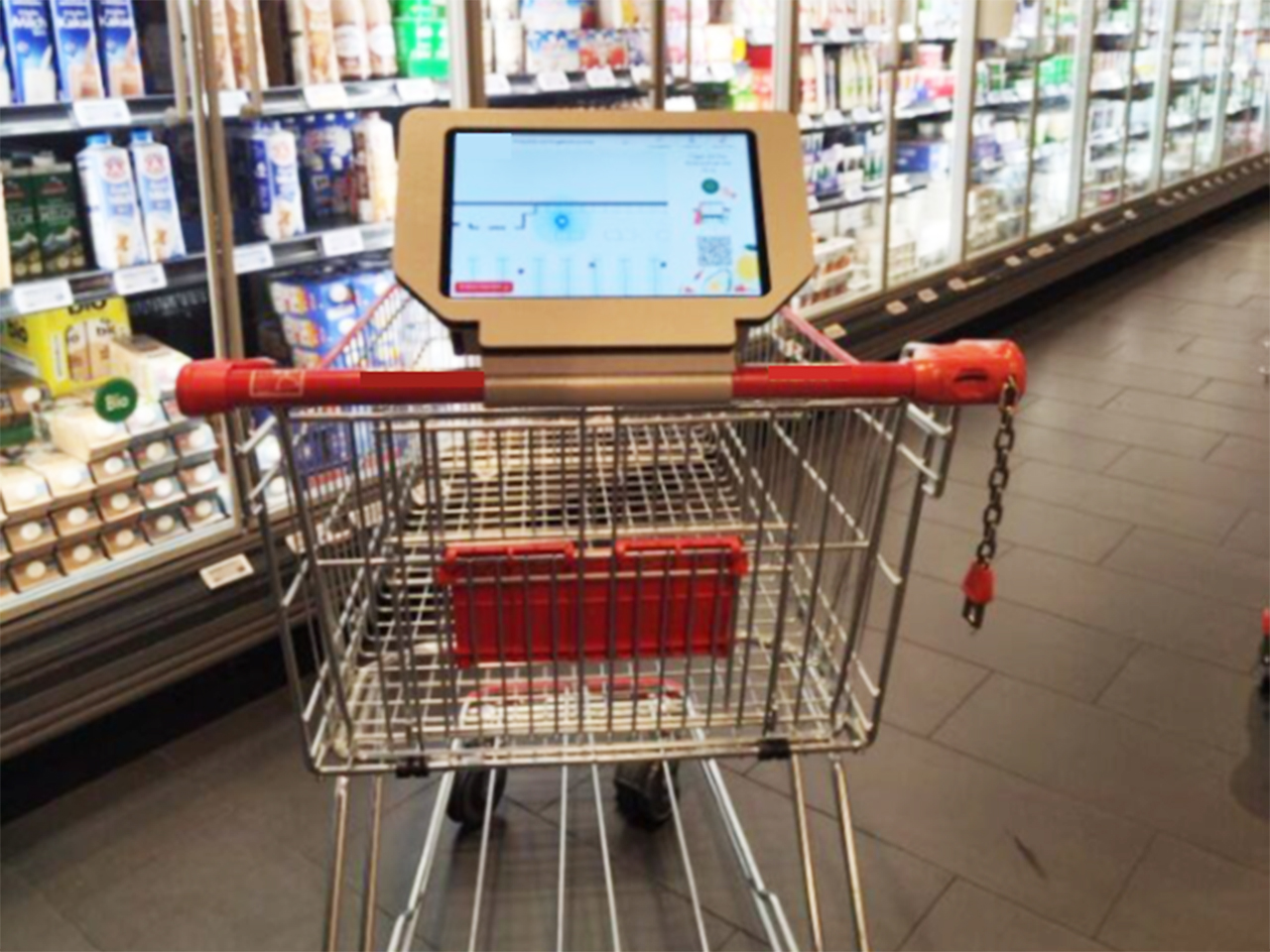
The research captured 12,418 shopping sessions across a month in a well-known German supermarket chain, including 9,422 using the technology available to them.
Findings show:
- Shoppers engaging with smart shopping carts spent 32% more on average than those that didn’t, with particularly large differences observed on afternoons and at weekends.
- Smart shoppers also bought 25% more items than non-users, with more purchased in afternoons and evenings.
- Smart shoppers spent 23% more time on their shopping experiences, with longest durations spent in the evening.
- Across all customers, high temperatures shorten average shopping trip duration.
For all sessions, researchers collected information on basket value, basket size, and time spent in-store. Each shopping session was also timestamped and linked to time of day and day of the week when a cart was first activated. Days were divided into three sections (morning, afternoon and evening) as well as weekday and weekend shopping. Types of engagement were also recorded to differentiate between use of carts for shopping lists, recommendations and store navigation.
Alongside general findings, shoppers who recorded more than 20 screen interactions during a shopping session, identified by the researchers as ‘superusers’, bought significantly more items and stayed in store for longer, but did not spend more money overall. This indicates those who use technology the most may be hedonic shoppers, doing so for the experience rather than out of necessity.
In addition, when interaction with trolleys reached a certain level spending and basket sizes begin to decrease. This suggests using technology for entertainment or general screen engagement, rather than a genuine interest in the content being displayed, can produce unwanted consequences for retailers.
Lead author Dr Sabrina Gottschalk, Lecturer in Marketing at Bayes Business School, said:
“In recent times, major UK supermarket chains Waitrose and Morrisons have been trialling digital trolleys of their own, while Tesco shoppers can now use its app to guide them around a store.
“Retailers are increasingly using technology to enhance the shopping experience for consumers, and our findings suggest there may be significant revenue gains from doing so effectively. As well as guiding customers towards special offers and new products, digitalisation induces increased engagement and additional advertising platforms.
“Although technology should in theory improve shopping experiences, consumers should be wary of relying solely on devices and remain conscious of how digital prompts and recommendations shape their purchase decisions.”
Co-author Dr Yusuf Oc, Senior Lecturer in Marketing at Bayes Business School, said:
“Our research shows clear spikes in spending and consumption for those deciding to use in-store digital assistance, suggesting that retailers should offer this technology and entice customers to use it – perhaps with a promise of loyalty points or prizes.
“The increase in afternoon and weekend activity from our findings should prompt supermarkets to promote higher-end items at these times to cash in on profligate customers, with offers on new items reserved for evening shoppers.
“However, figures also suggest that over-reliance on smart trolleys in a single session can actually distract customers and diminish returns, leading to lower spending and basket sizes.
“One way that supermarkets might tackle this issue is to offer more experiential or limited-time deals to keep customers interested in purchasing as well as trying out new technology.”
‘Customer responses to smart shopping carts in supermarkets’ by Dr Sabrina Gottschalk, Annika Lorenz-Kornfeld, Dr Yusuf Oc and Nils Eisler is published in the Journal of Business Research.
Notes to Editors
- The dataset includes individual data from a one-month observation period in March 2025. Total sample is 12,418 shopping sessions, of which 2,996 (24.2%) were completed by non-users of the smart-cart technology and 9,422 (75.8%) by active users.
- For all sessions, the dataset includes information on basket value, basket size, and time spent in-store. Each shopping session is timestamped and linked to the day of the week and the time of day when the cart was first activated.
Other stories you might like
-
Window shopping: Research finds transparent product packaging heightens our sense of ownership
New research co-authored by Professor Zachary Estes shows how retailers can build psychological affinity for their products.
-
Shopping trolleys save shoppers money as pushing reduces spending, finds new study
Ahead of the holiday season, new Bayes Business School research has found that repositioning the handles on trolleys could boost sales by 25 per cent for retailers.
-

Disability inclusion in advertising builds stronger brand affinity
Consumer attitudes towards brands are more positive when their adverts feature people with a disability, new research finds.