

Professor Baba Sheba reflected on his career transforming digital education and further explored the question of what it takes to scale it well.
Published
Colleagues, students, collaborators and family members gathered to celebrate the inaugural lecture of Professor Baba Sheba, Professor of Digital Education and Transformation.
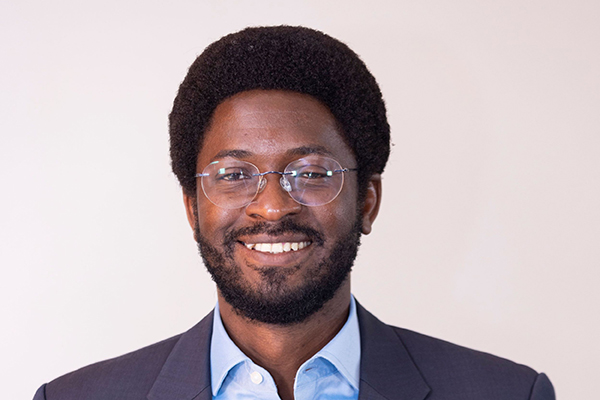 He was awarded his title in October 2024 in recognition of his leadership in advancing learning through technology and innovation. He currently serves as Director of Digital Transformation at City St George’s, having previously been Director of Digital Education at legacy St George’s. In these roles, he has led a coordinated, university-wide approach to digital innovation in education.
Opening the evening, Professor Steve Gillard, Associate Dean for Research and Innovation at the School of Health & Medical Sciences, said: “Baba has coordinated a genuinely university-wide approach to academic digital innovation, ensuring that technology serves teaching and learning rather than the other way around. This is a professorship grounded not in abstract ideas, but in sustained practice, scholarly insight and deep commitment to our academic mission”.
In his lecture titled Pull, Not Push: Collaboration and governance for high-impact digital education, Professor Sheba traced his journey as a scholar-practitioner, reflecting on a career that spans academic leadership, strategy and technology consultancy, and trusteeship roles in the NGO sector.
A central theme of the lecture was the intersection of governance, digital expertise and values. “Digital transformation is not just about technology, it comes from pull leadership,” he said.
He emphasised that successful innovation depends on strong governance structures, clear accountability and a shared sense of direction.
Over the past six years at the Tooting campus, Professor Sheba has led major advances in digital education. He played a key role in guiding the university through the rapid shift to online learning during the Covid-19 pandemic, strengthening the quality and consistency of digital and blended learning across educational programmes.
He has also been instrumental in building collaborative governance and partnership structures that enable innovation to scale safely, ensuring clear standards, ownership and support. His work has placed digital inclusion at the heart of educational quality, embedding accessibility into everyday practice through staff capability building and institutional assurance.
Professor Sheba has secured significant funding for campus-wide transformation projects, including £5.8 million from the Office for Students for digital infrastructure on-campus initiatives. He has also led efforts to prepare staff and students for emerging technologies and become more “digitally capable”, hosting the university’s first GenAI Day, piloting a new virtual reality experience to improve student stress and anxiety, and introducing an array of AI initiatives. His work has extended to supporting module teams in redesigning assessments for the age of AI and provided guidance on its responsible use in teaching and learning.
Speaking about the growing role of AI in education, Professor Sheba shared ongoing work that explores a “cognitive co-pilot” platform where users are taken on a journey to develop critical thinking skills. He explained:
Throughout his lecture, he returned to the importance of empowering others, describing leadership as enabling collective success. It was a lecture that also looked ahead – sharing a compelling vision for the future of higher education. A future that is rooted in innovation, inclusion and strong values-led leadership.