

The debate, held in December, marked the first time that aphasia had been discussed at length in the Scottish Parliament’s 26-year history
By Mr George Wigmore (Senior Communications Officer), Published
The aphasia work carried out at City St George’s, University of London by Dr Abi Roper and colleagues was formally recognised in Scottish Parliament during its first-ever debate on aphasia, marking a significant moment for awareness of the condition and those affected by it.
Aphasia is a long-term, life-changing condition that affects a person’s ability to understand, speak, read or write. It affects around one in three stroke survivors and can also result from brain injury or neurological disease. Despite its prevalence, awareness of aphasia remains low, highlighting the significance of the parliamentary debate.
The debate, held on Tuesday 16 December 2025, marked the first time that aphasia had been discussed at length in the Scottish Parliament’s 26-year history. Before this, the term had appeared only five times in the Official Report. The session brought together Members of the Scottish Parliament (MSPs), charity representatives, speech and language therapists and people with lived experience of aphasia, highlighting the growing momentum behind national and international efforts to improve understanding and support.
Dr Roper, Research Fellow and Speech and Language Therapist at City St George’s, attended the debate alongside colleagues from across Scotland and the UK. During proceedings, MSPs explicitly referenced both her work and the University’s wider contributions to innovative aphasia research and engagement.
Emma Harper MSP highlighted creative public engagement initiatives, including the Rocking Aphasia campaign and other collaborations involving City St George’s, stating:
“Thankfully, inspiring initiatives are emerging here and across the UK. Last June’s rocking aphasia campaign saw painted pebbles left in public places, with each stone holding a story, urging finders to learn more, speak slower and listen with intent. Similarly, City St George’s, University of London collaborated with Aphasia Re-Connect to use music in storytelling concerts, underscoring how much remains behind the silence.”

Michael Marra MSP also drew attention to Dr Roper’s leadership in the field, particularly her role in chairing the British Aphasiology Society conference earlier this year, which also featured an opening keynote from Professor Stephanie Wilson, from the Centre for Human-Computer Interaction Design at City St George’s. He told Parliament:
“I am grateful to Dr Abi Roper for sharing some of the excellent work that is being done. In August 2025, Dr Roper chaired the international aphasia conference in Dundee that brought together 200 people from across the globe who live with aphasia themselves, support others who do so or are researchers investigating the condition. It is hugely encouraging to hear that a growing international community is working together to better understand aphasia and support people living with it.”
The debate was welcomed by leaders in the speech and language therapy profession. Glenn Carter, Head of the Royal College of Speech and Language Therapists (RCSLT) in Scotland, described it as a positive debate and highlighted the role speech and language therapists play in supporting people with aphasia, helping them rebuild their communication skills, interact with loved ones and get back to work and leisure activities. He added:
“Some very thoughtful contributions in the debate, including mention of the importance of speech and language therapists, Speakability Tayside, RCSLT’s Communication Access training and Dr Abi Roper’s work chairing this year’s international aphasia conference in Dundee. It was a positive debate that I hope will lead to further understanding and support for people with aphasia.”
Reflecting on the occasion, Dr Roper said:
“Seeing aphasia debated for the first time at a formal level in Parliament was a career highlight, and certainly a groundbreaking day for me! It felt like a real turning point for raising awareness of a condition that affects so many people but is so often overlooked. I’m proud to know that the work of our brilliant aphasia research team at City St George’s is contributing to that change.”
The debate signals growing political and public recognition of aphasia and the importance of research, clinical practice and creative engagement to help those living with the condition.
Related schools, departments and centres
Other stories you might like
-

A cheek swab test could identify children with potentially deadly heart condition
A simple cheek swab test, being developed by scientists at City St George’s could detect children who have arrhythmogenic cardiomyopathy, according to research being presented at the European Society.
-
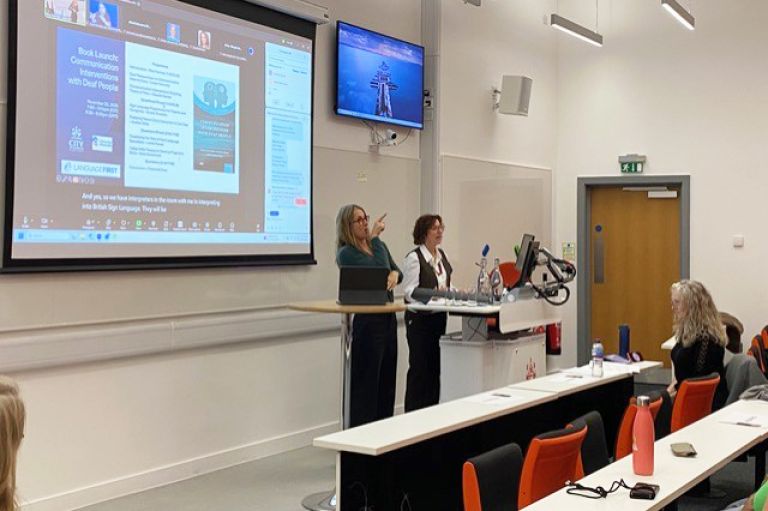
City St George’s hosts international conference on communication interventions with deaf people
The event, which was held simultaneously in London and Washington DC, marked the launch of the book Communication Interventions with Deaf People
-
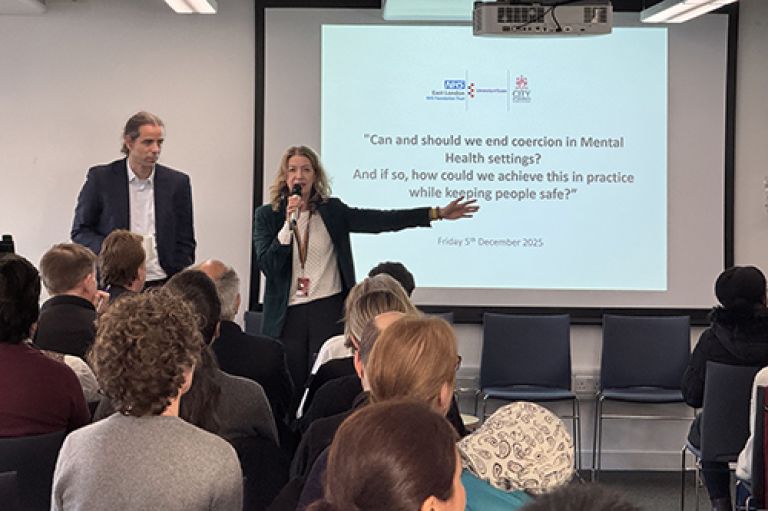
Collaborative mental health conference held with partner universities
Event explored the topic of whether healthcare professionals should end coercion in mental health settings, and if so, how that can be done safely


