

Published
Students graduating from Bayes this week were encouraged to respond to the inevitable challenges of life by drawing strength from within, from their families and friends, and from their heritage.
Executive Dean Professor Andre Spicer drew on his own roots in New Zealand to share the “gift of two precious words: Kia Kaha”.
“Kia Kaha is a Māori phrase which roughly translates as ‘stay strong’ or ‘be strong’ and together the words inspire and encourage you to be tenacious. As we celebrate with you, remember the strength and perseverance that you have tapped into to get here. However, it wasn’t just your own strength which got you here. It was also the strength of your friends and family – and the Bayes faculty and staff. They supported you.”
Professor Spicer continued: “Today we are celebrating not just the degrees our graduates are about to receive. We are also celebrating a fundamental human virtue. This is the virtue of staying strong in the face of challenge. The question is not whether these challenges are coming. They are. The real question is, how you will deal with them.”
The Maori people, Professor Spicer said, continue to draw on the fortitude and tenacity of ancestors who, centuries ago, rowed canoes thousands of miles across the Pacific Ocean from Polynesia to New Zealand.
“Kia Kaha is not just about physical strength. It is about a deeper sense of strength – which incorporates emotional, social, cognitive, creative and spiritual strength. Kia Kaha is not a showy strength. It is about the quiet and enduring strength which we often call resilience or fortitude. Kia Kaha is not just about individual strength. It is a strength which comes from pulling together and picking each other up."
Tested on the battlefields
“Kia Kaha is more than just a phrase. It was the motto of the Māori battalion during the First World War. When these young men, who had grown up on farms and in villages, found themselves shipped to the other side of the world to fight far from home, they called out these words.
“Over a century later, Kia Kaha became the rallying cry for an entire city when Christchurch was flattened by a massive earthquake in 2011. This rallying cry helped residents rebuild the city from ground up.
“Staying strong doesn’t mean denying our limitations. It doesn’t mean ignoring our suffering. It doesn’t mean not admitting our weaknesses."
Staying strong means recognising our hurt, owning up to the things which are hard, telling others when we flinch under the weight of life. Kia Kaha means stumbling, falling, taking our rest, recovering, then getting up and giving it a go, again.
“Kia Kaha is a reminder that in face of adversity, we have strength within. When we face an impossible situation, Kia Kaha reminds us that we have got through challenges before and we can get to the other side of this challenge.
“Kia Kaha is also a reminder that we have strength around us. When we feel alone and simply don’t have the strength to keep going, staying strong means reaching out. It means turning to our friends, family and colleagues to share our problems and ask for help. Kia Kaha is the strength we gain from the people around us.
“Kia Kaha is a reminder that your ancestors have faced adversity much worse than the ones you face and that our ancestors got through it. It is a reminder that it is thanks to fortitude of our forbearers that we stand here today. Kia Kaha is also a reminder that we need to be strong for those who will come after us. We need to use our energy and effort now will help to build the foundations of the future.
“Taking the risk to sail into the unknown takes a great degree of individual and collective strength."
"None of us is going to set out in canoes to cross an ocean. But each of us will set out on our journeys in life – whether that is moving country, starting a new job, founding a company, changing industries, starting a family. On each of these journeys we will face challenges.”
“When you are working on that crucial project and feel like you have hit the wall, Kia Kaha. When you have pitched your big idea to the 20th time to an audience of blank faces, Kia Kaha.”
Professor Spicer concluded: “When you go out there into the world and take on the challenges it offers, remember these two words: Kia Kaha.”
Other stories you might like
-
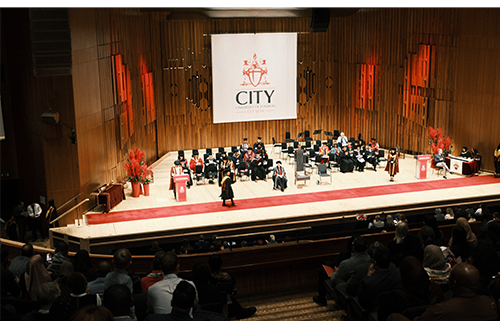
Be prepared to step up in challenging times, Bayes Dean tells graduates
Bayes Dean Professor Andre Spicer urged graduates to prepare for the unexpected at their winter graduation
-
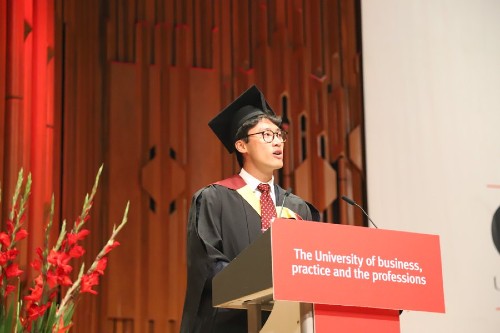
Carry on learning, Dean urges Bayes graduates
Bayes Dean Professor Andre Spicer urged new graduates to experiment and challenge their assumptions in the workplace